|
 |
 |
 |
 |
 |
 |
 |
 |

 |
Saturn's Rings In Ultraviolet
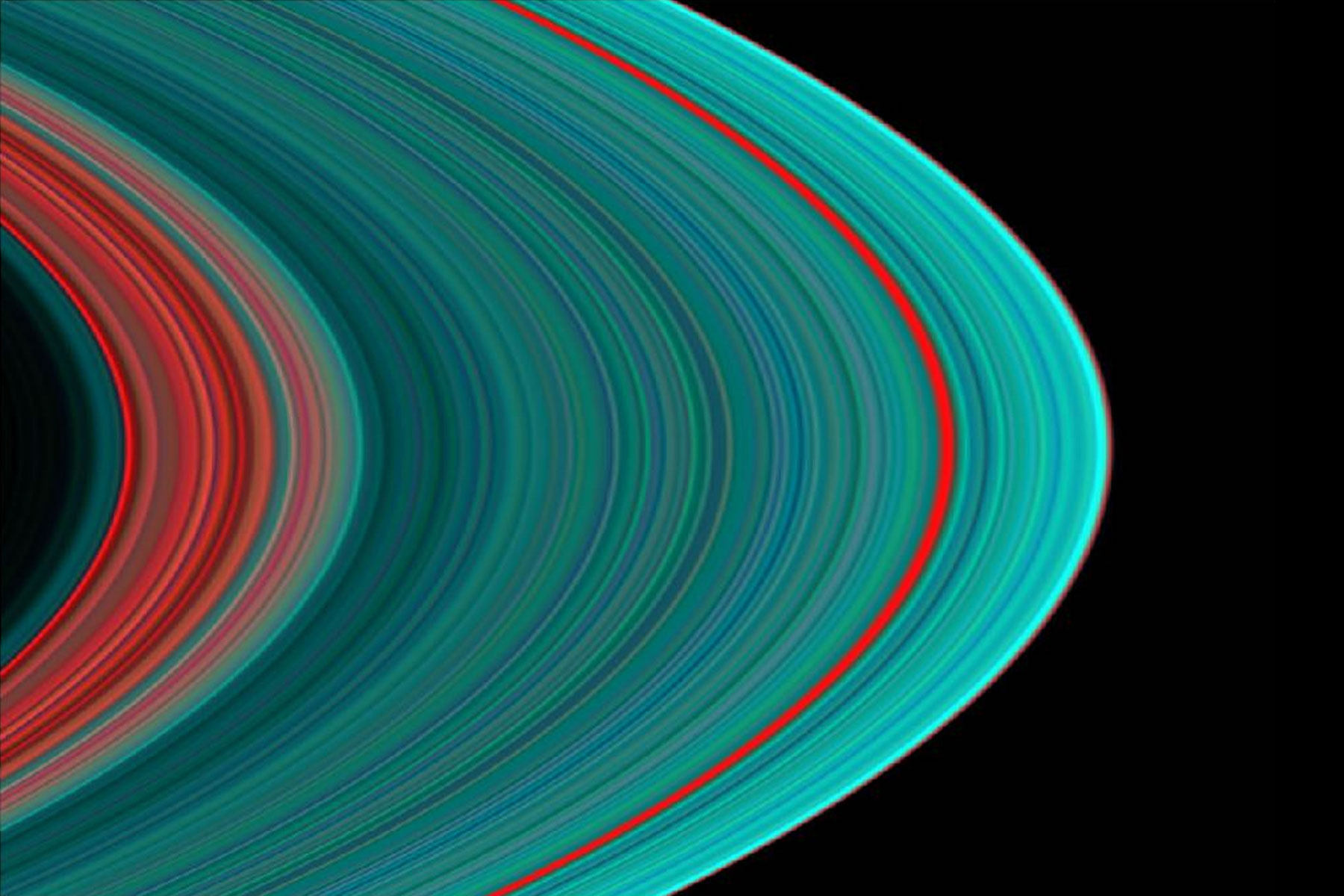
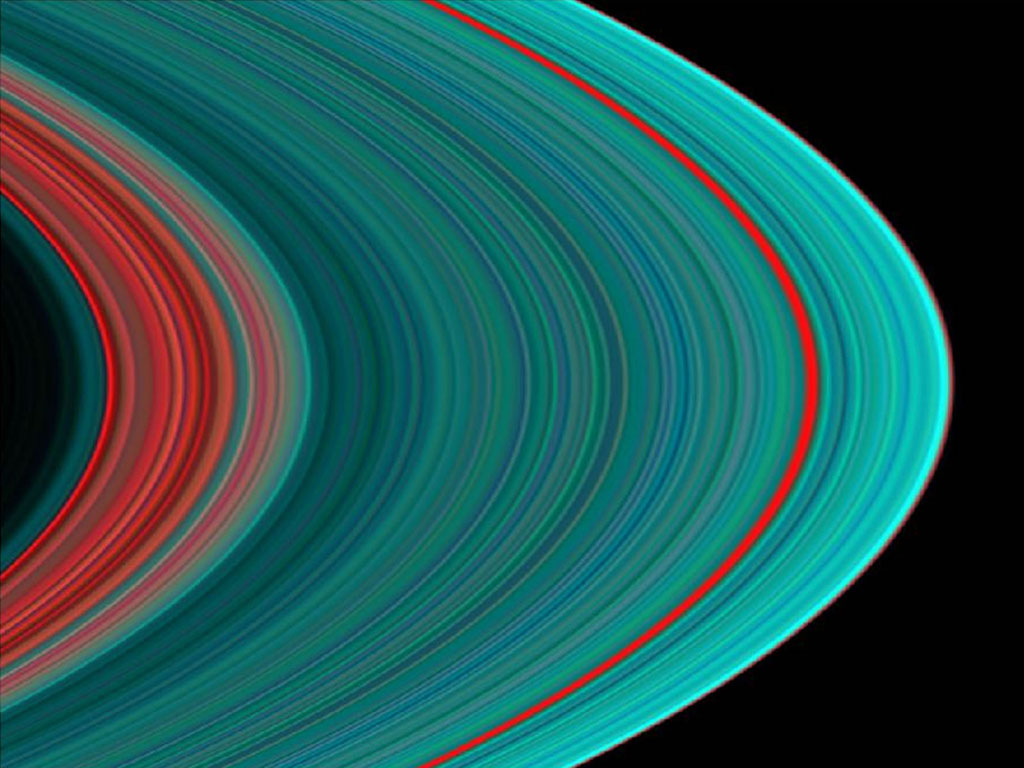
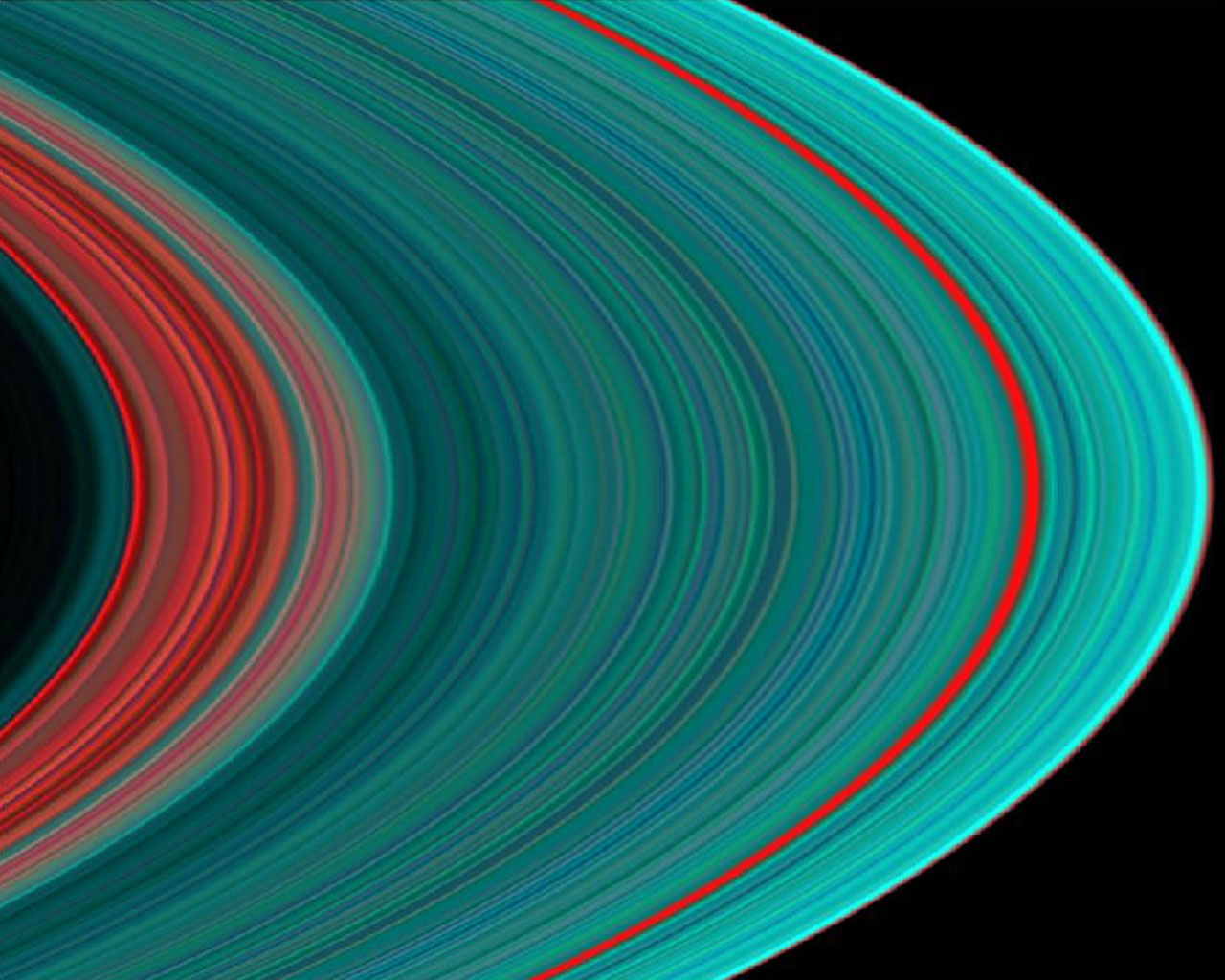
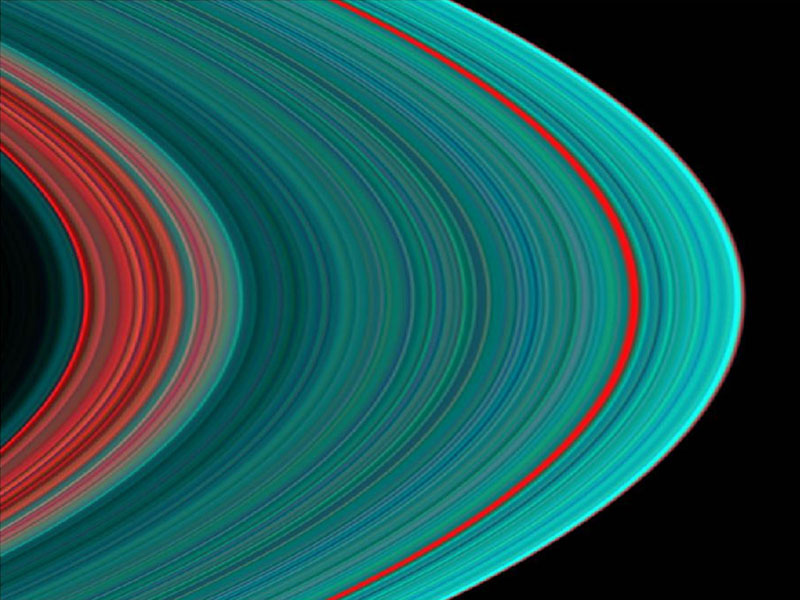
Moffet Field CA (SPX) Jul 09, 2004 The best view ever of Saturn's rings in the ultraviolet indicates there is more ice toward the outer part of the rings, hinting at ring origin and evolution, say two University of Colorado at Boulder researchers involved in the Cassini mission. Researchers from CU-Boulder's Laboratory for Atmospheric and Space Physics, Joshua Colwell and Larry Esposito, said the UV spectra taken during the Cassini spacecraft's orbital insertion June 30 show definite compositional variation in the A, B and C rings. Esposito, who discovered the F ring around Saturn in 1979 using Pioneer 11 data, is the team leader for Cassini's Ultraviolet Imaging Spectrograph, or UVIS, a $12.5 million instrument riding on the spacecraft. A UVIS team member and ring expert, Colwell created the color-enhanced images from the spectra. The CU-Boulder built UVIS instrument is capable of resolving the rings to show features up to 60 miles across, roughly 10 times the resolution obtained by the Voyager 2 spacecraft. The instrument was able to resolve the "Cassini division," discovered by Giovanni Domenico Cassini in the 17th century, which separates the A and B rings of Saturn, proving the rings are not one contiguous feature. The ring system begins from the inside out with the D, C, B and A rings followed by the F, G and E rings. The red in both images indicates sparser ringlets likely made of "dirty," and possibly smaller, particles than in the denser, icier turquoise ringlets. Community Email This Article Comment On This Article Related Links Laboratory for Atmospheric and Space Physics at Boulder Uo Colorado, Boulder SpaceDaily Search SpaceDaily Subscribe To SpaceDaily Express Explore The Ring World of Saturn and her moons Jupiter and its Moons The million outer planets of a star called Sol News Flash at Mercury
 Cassini Images Halo Around Titanic Moon Off Saturn
 Pasadena CA (SPX) Dec 27, 2005
With its thick, distended atmosphere, Titan's orange globe shines softly, encircled by a thin halo of purple light-scattering haze. |
|
|

| The content herein, unless otherwise known to be public domain, are Copyright 1995-2006 - SpaceDaily.AFP and UPI Wire Stories are copyright Agence France-Presse and United Press International. ESA PortalReports are copyright European Space Agency. All NASA sourced material is public domain. Additionalcopyrights may apply in whole or part to other bona fide parties. Advertising does not imply endorsement,agreement or approval of any opinions, statements or information provided by SpaceDaily on any Web page published or hosted by SpaceDaily. Privacy Statement |