|
 |
 |
 |
 |
 |
 |
 |
 |

 |
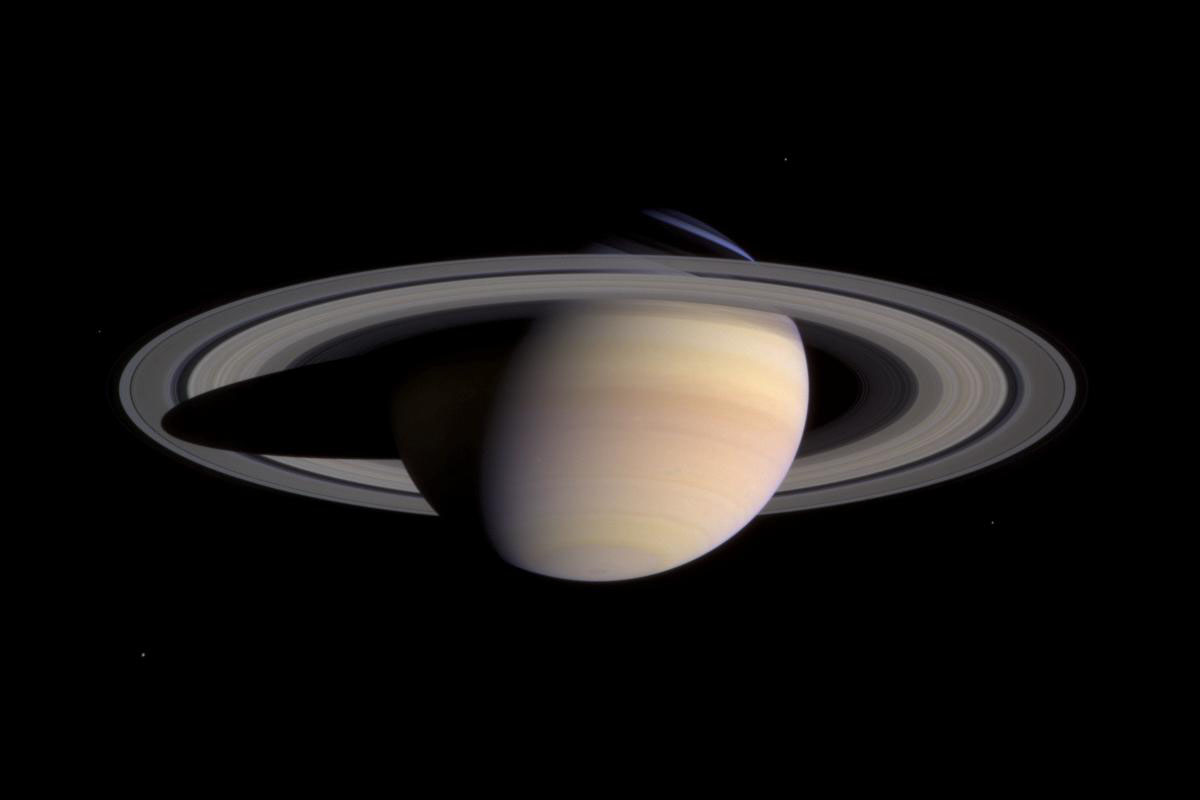
Saturn All Up By Cassini One Last Time
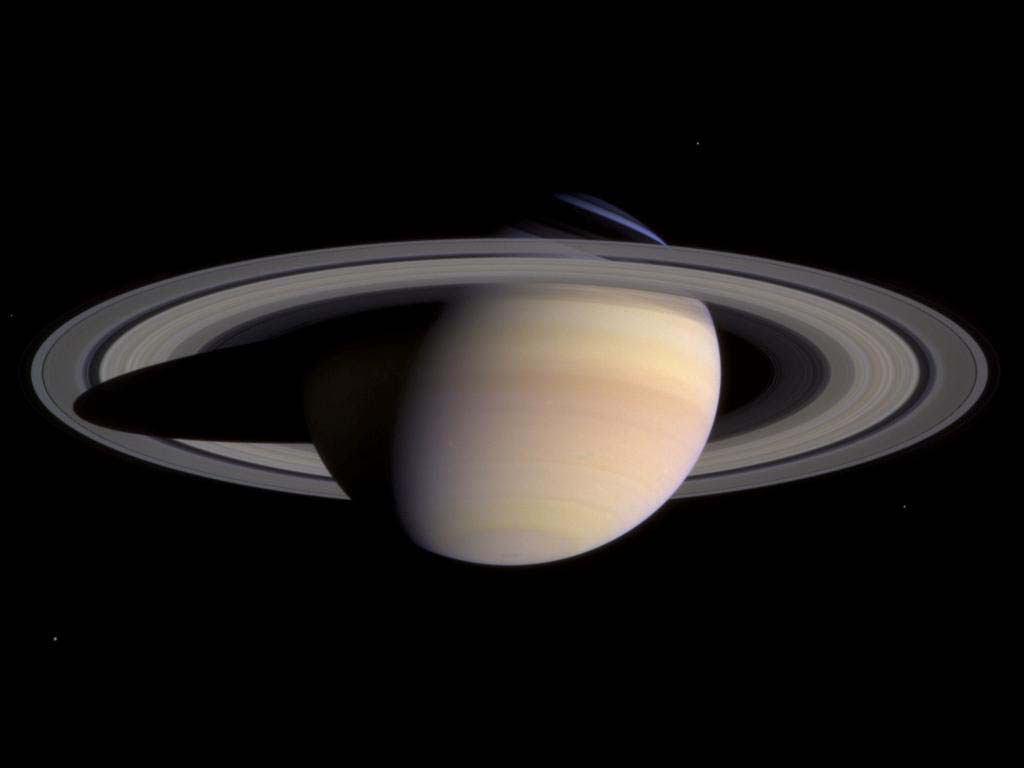
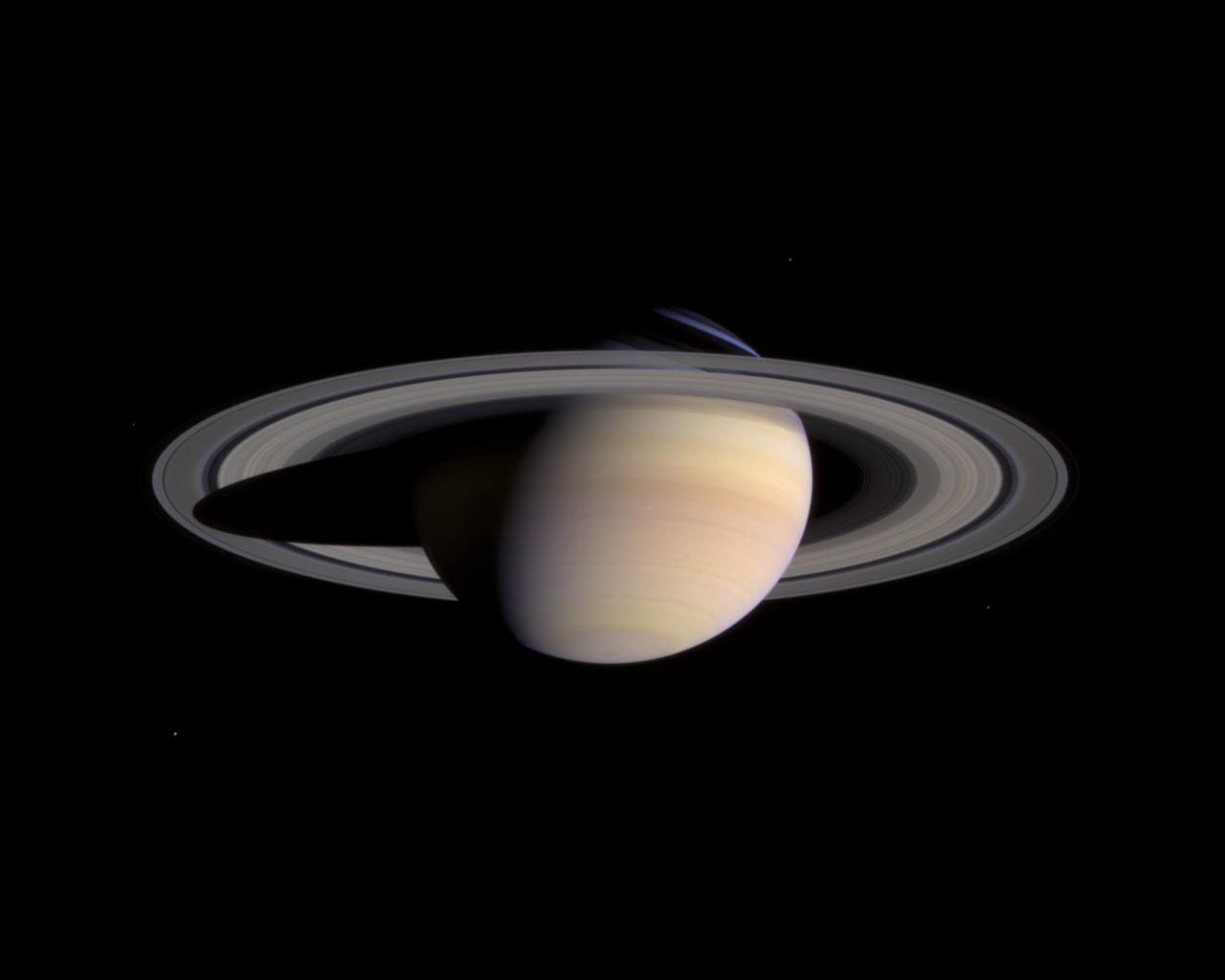
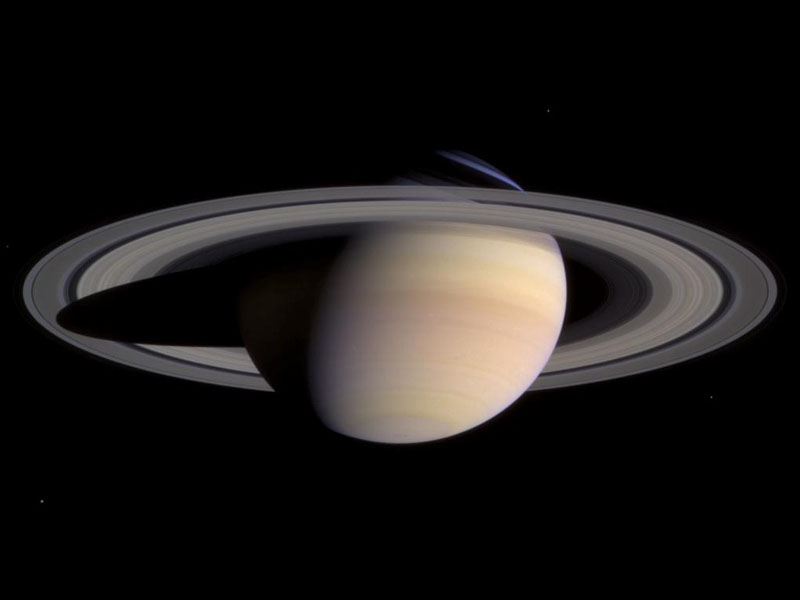
Boulder - Apr 30, 2004 Saturn and its rings completely fill the field of view of Cassini's narrow angle camera in this natural color image taken on March 27, 2004. This is the last single 'eyeful' of Saturn and its rings achievable with the narrow angle camera on approach to the planet. From now until orbit insertion, Saturn and its rings will be larger than the field of view of the narrow angle camera. Color variations between atmospheric bands and features in the southern hemisphere of Saturn, as well as subtle color differences across the planet�s middle B ring, are now more distinct than ever. Color variations generally imply different compositions. The nature and causes of any compositional differences in both the atmosphere and the rings are major questions to be investigated by Cassini scientists as the mission progresses. The bright blue sliver of light in the northern hemisphere is sunlight passing through the Cassini Division in Saturn's rings and being scattered by the cloud-free upper atmosphere. Two faint dark spots are visible in the southern hemisphere. These spots are close to the latitude where Cassini saw two storms merging in mid-March. The fate of the storms visible here is unclear. They are getting close and will eventually merge or squeeze past each other. Further analysis of such dynamic systems in Saturn's atmosphere will help scientists understand their origins and complex interactions. Moons visible in this image are (clockwise from top right): Enceladus (499 kilometers or 310 miles across), Mimas (398 kilometers or 247 miles across), Tethys (1060 kilometers or 659 miles across) and Epimetheus (116 kilometers or 72 miles across). Epimetheus is dim and appears just above the left edge of the rings. Brightnesses have been exaggerated to aid visibility. The image is a composite of three exposures, in red, green and blue, taken when the spacecraft was 47.7 million kilometers (29.7 million miles) from the planet. The image scale is 286 kilometers (178 miles) per pixel. Community Email This Article Comment On This Article Related Links Cassini Imaging Team Cassini-Huygens at JPL SpaceDaily Search SpaceDaily Subscribe To SpaceDaily Express Explore The Ring World of Saturn and her moons Jupiter and its Moons The million outer planets of a star called Sol News Flash at Mercury
 Cassini Images Halo Around Titanic Moon Off Saturn
 Pasadena CA (SPX) Dec 27, 2005
With its thick, distended atmosphere, Titan's orange globe shines softly, encircled by a thin halo of purple light-scattering haze. |
|
|

| The content herein, unless otherwise known to be public domain, are Copyright 1995-2006 - SpaceDaily.AFP and UPI Wire Stories are copyright Agence France-Presse and United Press International. ESA PortalReports are copyright European Space Agency. All NASA sourced material is public domain. Additionalcopyrights may apply in whole or part to other bona fide parties. Advertising does not imply endorsement,agreement or approval of any opinions, statements or information provided by SpaceDaily on any Web page published or hosted by SpaceDaily. Privacy Statement |