|
 |
 |
 |
 |
 |
 |
 |
 |

 |
Satellite Images Predict Hantaviral Transmission Risk
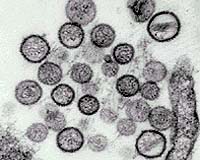
Baltimore - Dec 17, 2002 Researchers from the Johns Hopkins Bloomberg School of Public Health and other institutions report that satellite imagery could be used to determine areas at high-risk for exposure to Sin Nombre virus (SNV), a rodent-born disease that causes the often fatal hantaviral pulmonary syndrome (HPS) in humans. According to the researchers, satellite imaging detects the distinct environmental conditions that may serve as a refuge for the disease-carrying deer mice. Higher populations of infected deer mice increase the risk of HPS to humans. Their findings are published in the study, "Satellite Imagery Characterizes Local Animal Reservoir Populations of Sin Nombre Virus in Southwestern United States," which will appear in the December 2, 2002, issue of the Proceedings of the National Academy of Sciences. Gregory E. Glass, PhD, professor of molecular microbiology and immunology in the Johns Hopkins Bloomberg School of Public Health, said, "This is an important finding because, at a practical level, it provides a way to monitor the environment for the risk of an infectious disease before an outbreak occurs. At a more basic level it gives us a way to better understand why outbreaks happen when and where they do." Before satellite imaging was used to predict high-risk areas, the only SNV tracking method was through rodent sampling or follow-up to human cases of disease. Johns Hopkins Bloomberg School of Public Health researchers used Landsat Thematic Mapper (TM) satellite data from 1997 and 1998 to identify environments associated with human risk of HPS caused by rodent SNV. LANDSAT 5 TM imagery was obtained for a study area in the southwestern United States where HPS was initially recognized in 1993. The images were processed and HPS risk maps were generated. Logistic regression was used to estimate risk using the digital numbers in each of the three TM bands. The researchers teamed with workers from the University of New Mexico, the Centers for Disease Control and Prevention, and the IBM T.J. Watson Research Center to validate the analysis. Field and laboratory studies of collected rodents were performed in 1998 and 1999. The sample consisted of 15,042 rodents. Researchers tested the deer mice for SNV and then compared their findings to their satellite projected images. The prevalence of SNV infection in deer mouse populations varied among sites. Researchers found that high-risk sites were ecologically distinct from low-risk sites and SNV infection was prevalent among deer mice in high-risk areas. Woody plants, such as Ponderosa pine and Pinon pine, dominated high-risk sites. Low-risk sites usually contained snakeweed, saltbush, Creosote bush, sagebrush, tumbleweed, and mesquite. Dr. Glass said, "Future studies could characterize the ecological dynamics of local environmental conditions and monitor SNV transmission in deer mouse populations and then compare theses sites with lower-risk locations. This approach will help identify the environmental determinants of SNV persistence in the environment. The sites may provide important insights into identifying the environmental conditions that lead to increased levels of SNV in reservoir populations and the subsequent increased risk of human disease." Joshua B. Fine, DVM, and Timothy M. Shields, MA, with the School's Department of Molecular Microbiology and Immunology, and Jonathan A. Patz, MD, MPH, with the School's Department of Environmental Health Sciences, co-authored the study. Additional co-authors were Terry L. Yates, John B. Kendall, Andrew G. Hope, Cheryl A. Parmenter, C.J. Peters, Thomas G. Ksiazek, Chung-Sheng Li, and James N. Mills. Research was supported by an Intergovernmental Personnel Agreement from the Centers for Disease Control and NASA. Additional support was received from a cooperative agreement from the U.S. Environmental Protection Agency. Field studies were supported by NOAA and the Museum of Southwestern Biology. Community Email This Article Comment On This Article Related Links Johns Hopkins University Bloomberg School of Public Health Baltimore SpaceDaily Search SpaceDaily Subscribe To SpaceDaily Express Earth Observation News - Suppiliers, Technology and Application
 New Legislation Initiated To Support Commercial Remote Sensing Industry
 New York NY (SPX) Jan 11, 2006
The importance of remotely sensed data and technologies to support natural disasters has prompted attention and action in Washington. New initiatives and legislation authorizing appropriations to the remote sensing industry will be discussed at Strategic Research Institute's U.S. Commercial Remote Sensing Industry conference, scheduled for February 9-10, 2006 in Washington D.C. |
|
|

| The content herein, unless otherwise known to be public domain, are Copyright 1995-2006 - SpaceDaily.AFP and UPI Wire Stories are copyright Agence France-Presse and United Press International. ESA PortalReports are copyright European Space Agency. All NASA sourced material is public domain. Additionalcopyrights may apply in whole or part to other bona fide parties. Advertising does not imply endorsement,agreement or approval of any opinions, statements or information provided by SpaceDaily on any Web page published or hosted by SpaceDaily. Privacy Statement |