
 |
 |
 |
 |
 |
 |
 |
 |
 |

 |
Satellite Assisted Farming Consortium
Twin Cities - December 17, 1998 - A new, NASA-funded research initiative, combining expertise from universities, industry, and state and federal government promises to bring space age technology to farm and forest in the Upper Midwest. Organized as a consortium and based at based at UW-Madison and the University of Minnesota-Twin Cities, the new program is one of seven regional earth science application centers funded as part of a $14 million effort to direct NASA technology to solving environmentally related societal problems. The UW-Madison component of the new consortium is a combined effort of the Space Science and Engineering Center (SSEC) and the Departments of Atmospheric and Oceanic Sciences, Soil Science and Forest Ecology and Management. It will be directed by George Diak, a senior SSEC scientist, and will focus on the development of new tools -- computer models and new remote sensing and meteorological technologies -- to aid management decisions made by agricultural and natural resource managers. UM-Twin Cities scientists will concentrate on monitoring natural resource bases themselves. The new center, Diak said, has two primary goals: "We want to have a significant positive impact on the economy of the Upper Midwest by applying computer models and new measurement tools to current resource problems, and we want to create new tools to help give us insight into the potential effects of different management practices. "This includes looking at things like the potential effects of regional climate changes and their influence on forestry and agriculture, and our ability to sustain natural and managed environments," Diak said. Other members of the Wisconsin component of the consortium include Champion International Corp., Case Corp. of Racine, the Wisconsin Department of Natural Resources and the U.S. Forest Service. According to Diak, the consortium will work on building computer models that depend on remote sensing technology, satellite-based instruments capable of making detailed measurements of the atmosphere or land over large geographic distances. As NASA's Earth Observing System is deployed over the next decade, a wealth of new satellites and satellite-based tools for measuring the Earth and its atmosphere will come into play. Using those measurements to power new computer models, Diak said, scientists can help farmers and resource managers determine things like soil moisture, nitrogen content of the soil and grain moisture as crops mature. In forests, by observing and modeling conditions of the soil, plants and atmosphere, it may be possible to forecast disease and insect infestations. Already, Diak said, there are models that help farmers decide when to irrigate, when to apply chemicals for disease control, and that warn cranberry growers of the potential for overnight frost. The consortium's industrial members would help find "cost-efficient methods of commercializing emerging farming technologies," said James Stoddart, vice president for Case Corporation's Advanced Farming System's Division.
Satellite Assisted Farming Consortium
Earth Observation Reports At SpaceDaily
Email This Article Comment On This Article Related Links Space
 Satellite Launch To Boost DTH In India
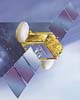 Calcutta, India (SPX) Dec 28, 2005
The successful launch Thursday of India's heaviest satellite from spaceport of Kourou in French Guyana may have boosted the country's space research efforts to yet another level, but it has also lifted the spirits of at least three Direct-To-Home televisions broadcasters, one of which has been waiting for years to launch its services in India. |
|
|

|
|
|
|
|
|
|
|
|
|
|
|
| The content herein, unless otherwise known to be public domain, are Copyright 1995-2006 - SpaceDaily.AFP and UPI Wire Stories are copyright Agence France-Presse and United Press International. ESA PortalReports are copyright European Space Agency. All NASA sourced material is public domain. Additionalcopyrights may apply in whole or part to other bona fide parties. Advertising does not imply endorsement,agreement or approval of any opinions, statements or information provided by SpaceDaily on any Web page published or hosted by SpaceDaily. Privacy Statement |

