|
 |
 |
 |
 |
 |
 |
 |
 |

 |
Sandia Completes Depleted Uranium Study
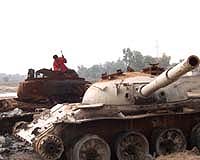
Albuquerque NM (SPX) Jul 22, 2005 Sandia National Laboratories has completed a two-year study of the potential health effects associated with accidental exposure to depleted uranium (DU) during the 1991 Gulf War. The study, "An Analysis of Uranium Dispersal and Health Effects Using a Gulf War Case Study," performed by Sandia scientist Al Marshall, employs analytical capabilities used by Sandia's National Security Studies Department and examines health risks associated with uranium handling. U.S. and British forces used DU in armor-piercing penetrator bullets to disable enemy tanks during the Gulf and Balkan wars. DU is a byproduct of the process used to enrich uranium for use in nuclear reactors and nuclear weapons. During the enrichment process, the fraction of one type of uranium (uranium-235) is increased relative to the fraction found in natural uranium. As a consequence, the uranium left over after the enrichment process (mostly uranium-238) is depleted in uranium-235 and is called depleted uranium. The high density, low cost, and other properties of DU make it an attractive choice as an anti-tank weapon. However, on impact, DU particulate is dispersed in the surrounding air both within and outside the targeted vehicle and suspended particulate may be inhaled or ingested. Concerns have been raised that exposure to uranium particulate could have serious health problems including leukemia, cancers, and neurocognitive effects, as well as birth defects in the progeny of exposed veterans and civilians. Marshall's study concluded that the reports of serious health risks from DU exposure are not supported by veteran medical statistics nor supported by his analysis. Only a few U.S. veterans in vehicles accidentally struck by DU munitions are predicted to have inhaled sufficient quantities of DU particulate to incur any significant health risk. For these individuals, DU-related risks include the possibility of temporary kidney damage and about a 1 percent chance of fatal cancer. Several earlier studies were carried out by the U.S. Department of Defense, by University Professors Fetter (University of Maryland) and von Hippel (Princeton), and by an Army sponsored team from Pacific Northwest National Laboratories and Los Alamos National Laboratory. The conclusions from the Sandia study are consistent with these earlier studies. The Sandia study, however, also includes an analysis of potential health effects of DU fragments embedded as shrapnel in the bodies of some U.S. veterans. The Sandia study also looked at civilian exposures in greater detail, examined the potential risk of DU-induced birth defects in the children of exposed individuals, and provided a more detailed analysis of the dispersion of DU following impact with a number of targeted vehicles. Community Email This Article Comment On This Article Related Links Sandia National Laboratories SpaceDaily Search SpaceDaily Subscribe To SpaceDaily Express The latest in Military Technology for the 21st century at SpaceWar.com
 Tadiran Electronic Systems Unveils The Spotter
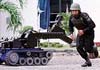 Holon, Israel (SPX) Dec 07, 2005
Tadiran Electronic Systems, a member of the Elisra Group, and a recognized expert in C4I systems for the modern battlefield, has just debuted the Spotter, a new and unique tele-operated Autonomous Unmanned Ground Vehicle (AUGV). |
|
|

| The content herein, unless otherwise known to be public domain, are Copyright 1995-2006 - SpaceDaily.AFP and UPI Wire Stories are copyright Agence France-Presse and United Press International. ESA PortalReports are copyright European Space Agency. All NASA sourced material is public domain. Additionalcopyrights may apply in whole or part to other bona fide parties. Advertising does not imply endorsement,agreement or approval of any opinions, statements or information provided by SpaceDaily on any Web page published or hosted by SpaceDaily. Privacy Statement |