
 |
 |
 |
 |
 |
 |
 |
 |
 |

 |
Sample-Collection Tests By Phoenix Lander Continue
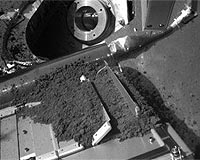
Tucson AZ (SPX) Jul 11, 2008 NASA's Phoenix Mars Lander's science and engineering teams are testing methods to get an icy sample into the Robotic Arm scoop for delivery to the Thermal and Evolved Gas Analyzer, or TEGA. Ray Arvidson of Washington University in St. Louis, Phoenix's "dig czar," said the hard Martian surface that Phoenix has reached proved to be a difficult target, comparing the process to scraping a sidewalk. "We have three tools on the scoop to help access ice and icy soil," Arvidson said. "We can scoop material with the backhoe using the front titanium blade; we can scrape the surface with the tungsten carbide secondary blade on the bottom of the scoop; and we can use a high-speed rasp that comes out of a slot at the back of the scoop." "We expected ice and icy soil to be very strong because of the cold temperatures. It certainly looks like this is the case and we are getting ready to use the rasp to generate the fine icy soil and ice particles needed for delivery to TEGA," he said. Scraping action produced piles of scrapings at the bottom of a trench on Monday, but did not get the material into its scoop, information returned from Mars on Monday night confirmed. The piles of scrapings produced were smaller than previous piles dug by Phoenix, which made it difficult to collect the material into the Robotic Arm scoop. "It's like trying to pick up dust with a dustpan, but without a broom," said Richard Volpe, an engineer from NASA's Jet Propulsion Laboratory, Pasadena, Calif., on Phoenix's robotic arm team. Images from the lander's robotic arm camera showed that the scoop remained empty after two sets of 50 scrapes performed earlier Monday were collected into two piles in the trench informally named "Snow White." These activities were a test of possible techniques for collecting a sample of ice or ice-rich soil for analysis. The mission teams are now focusing on use of the motorized rasp within the robotic arm scoop to access the hard icy soil and ice deposits. They are conducting tests on Phoenix's engineering model in the payload interoperability testbed at The University of Arizona in Tucson to determine the optimum ways to rasp the hard surfaces and acquire the particulate material produced during the rasping. The testbed work and tests on Mars will help the team determine the best way to collect a sample of Martian ice for delivery to TEGA. The Phoenix mission is led by Peter Smith of the UA with project management at JPL and development partnership at Lockheed Martin, Denver. International contributions come from the Canadian Space Agency; the University of Neuchatel, Switzerland; the universities of Copenhagen and Aarhus, Denmark; Max Planck Institute, Germany; and the Finnish Meteorological Institute. Community Email This Article Comment On This Article Share This Article With Planet Earth
Related Links Phoenix at LPL Phoenix at NASA Mars News and Information at MarsDaily.com Lunar Dreams and more
 NASA's Phoenix Mars Lander Uses Soil Probe And Swiss Scope
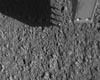 Pasadena CA (SPX) Jul 11, 2008
NASA's Phoenix Mars Lander has touched Martian soil with a fork-like probe for the first time and begun using a microscope that examines shapes of tiny particles by touching them. |
|
|

| The content herein, unless otherwise known to be public domain, are Copyright 1995-2007 - SpaceDaily.AFP and UPI Wire Stories are copyright Agence France-Presse and United Press International. ESA Portal Reports are copyright European Space Agency. All NASA sourced material is public domain. Additional copyrights may apply in whole or part to other bona fide parties. Advertising does not imply endorsement,agreement or approval of any opinions, statements or information provided by SpaceDaily on any Web page published or hosted by SpaceDaily. Privacy Statement |
 del.icio.us
 Digg
Digg Reddit
 YahooMyWeb
 Google
 Facebook