|
 |
 |
 |
 |
 |
 |
 |
 |

 |
Samoa claims rights to AIDS-fighting gene found in Pacific tree bark
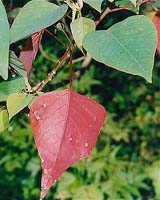
Auckland (AFP) Oct 22, 2004 The Samoan government has claimed sole rights to a gene believed to fight AIDS and cancer which grows in trees found in several Pacific nations, risking the ire of its neighbours. Using the 1992 international Convention on Biodiversity (CBD), Samoa last week became the first country to claim such rights over a native plant, the mamala tree (homalanthus nutans) whose bark is used to make AIDS and cancer trial drug prostratin. It also signed a 50-50 revenue-sharing deal with the American University of California, Berkeley, which is developing the potentially lucrative drug. Ownership of the gene gives Samoa exclusive rights to supply mamala bark even though the trees grow widely around the Pacific and have also been in traditional use in Fiji, Tahiti, Vanuatu and Australia. "What we are doing now is getting the rights so that when they need to proceed (with the drug) they will have to get it from Samoa," said Commerce Minister Joe Keil. "We have the rights to the research, and we -- only in Samoa -- can produce or harvest the mamala tree, so that they have to deal with us and the people in Samoa," he told AFP. But Clark Peteru, a matai or chief in the far-western village Falealupo whose healers introduced the tree to University of California botanist Paul Cox, said the deal could raise hackles in other Pacific nations. "Claims of ownership over any part of (the tree) could provoke objections from other countries," he told AFP. "This deal is being hailed by some, but it is not as rosy as it looks," he added. "We are being told it is good for us ... but it is very paternalistic." Peteru, who is also a lawyer and an environmentalist, said "the decision to claim ownership over the chemical was made without consultation with the people of Samoa. "Patents were taken out on prostratin seven years ago in the names of three United States organisations, including the university where Cox had been teaching. "To me that's an attack on sovereignty, not a defence of it." Keil, who said it was too early to know what Samoa could earn from the deal, said American botanist Cox had more than 30 years' association with Falealupo and its healers, who are known nationally. "Maybe the other islands are thinking 'why didn't we do the same thing' but we're grateful we've got Paul Cox working for us; he has Samoa very much at heart," he said. He said the 16-nation Pacific Forum had studied the issue of traditional knowledge and rights but had come to no agreement. The body made no response when approached for a comment by AFP. Meanwhile Cox acknowledged that the genus homalanthus grew in several Pacific nations but said Samoa had earned the right to the gene-sequence because of its extensive help in the research process. "No other nation has collaborated so freely with scientists in the study of homalanthus and no other nation can claim that its indigenous knowledge led directly to the discovery of the anti-viral properties of prostratin," he told "The Samoan extension of sovereignty to the gene sequence is therefore on strong ground under the CBD and under international law." Twenty years ago, Cox met fofo Epenesa Mauigoa who was treating hepatitis with a mamala concoction. He sent samples to the US National Cancer Institute (NCI), which in 1991 isolated prostratin. The protein, the active ingredient in the new drug, was patented by Cox, the AIDS Research Alliance and the NCI. Cox, knowing the uncertainties of drug development, said he had worked to provide early benefits for Falealupo instead of making it wait for any royalties. "My family and I initially raised funds to build the village school, and then founded a not-for-profit organisation called Seacology which continued to build water tanks, a small medical clinic, trails in the rain forest, cyclone relief and a rainforest canopy walkway for Falealupo village," he said. Falealupo had already benefited to the tune of 485,000 US dollars, he said, linked to prior agreements giving the scientists access to nearby forests. Community Email This Article Comment On This Article Related Links SpaceDaily Search SpaceDaily Subscribe To SpaceDaily Express Space Medicine Technology and Systems
 Genomic Sequences Processed In Minutes, Rather Than Weeks
 Richland WA (SPX) Jun 22, 2005
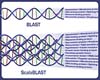
A new computational tool developed at the Department of Energy's Pacific Northwest National Laboratory is speeding up our understanding of the machinery of life - bringing us one step closer to curing diseases, finding safer ways to clean the environment and protecting the country against biological threats. |
|
|

| The content herein, unless otherwise known to be public domain, are Copyright 1995-2006 - SpaceDaily.AFP and UPI Wire Stories are copyright Agence France-Presse and United Press International. ESA PortalReports are copyright European Space Agency. All NASA sourced material is public domain. Additionalcopyrights may apply in whole or part to other bona fide parties. Advertising does not imply endorsement,agreement or approval of any opinions, statements or information provided by SpaceDaily on any Web page published or hosted by SpaceDaily. Privacy Statement |