|
 |
 |
 |
 |
 |
 |
 |
 |

 |
Safer, Easier System For Remote Explosive Detection
Ann Arbor MI (SPX) Apr 11, 2008 Detecting roadside bombs may become easier, thanks to chemical sensors being developed at the University of Michigan. A team led by chemistry professor Theodore Goodson III has created materials that sniff out TNT and give off signals that can be detected remotely---from a moving Humvee, for example. Their work was recently described in the journal Nanotechnology and also is the subject of a presentation at the 235th national meeting of the American Chemical Society in New Orleans, April 9, 2008 The materials under study are large macromolecules made up of smaller active parts (chromophores), put together in a branching pattern. When TNT vapor contacts the material, "the TNT gets caught in the branches, as if in a sieve," said Goodson, who has a joint appointment in the Department of Macromolecular Science and Engineering. Normally, these materials emit light (fluoresce) when their molecules are excited with pulses of infrared light. But even the slightest trace of TNT quenches that fluorescence. Goodson envisions a system in which sensors---which can be made for about $10 each---are positioned along the roadside and in other important locations. Passing military vehicles would be equipped with lasers to shoot infrared light at the sensors to excite the fluorescence and a specially-designed light-collection system to detect the sensors' response. Any sensors that don't fluoresce would be tip-offs to possible locations of roadside bombs. Goodson's remote detection scheme relies on highly sensitive, low-cost, battery-free, thin film sensors which require no electronic equipment or excitation source at the sites where they are installed. In contrast, conventional chemical TNT sensors for explosive detection have no remote capability and must be used in close proximity to the suspicious site, increasing the danger for military personnel. Using infrared light to excite the remote sensors minimizes light-scattering, allows for greater penetration through the atmosphere, and is safe to soldiers' eyes. Goodson's research team also is working on laser-based methods for directly detecting TNT, with no sensors on site. Community Email This Article Comment On This Article Related Links University of Michigan The Long War - Doctrine and Application
 China cracks two terrorist groups: state media
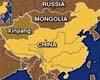 Beijing (AFP) April 10, 2008
China has cracked two terrorist groups in its heavily Muslim west that were planning attacks aimed at the Beijing Olympics, the nation's security ministry said Thursday. |
|
|

| The content herein, unless otherwise known to be public domain, are Copyright 1995-2007 - SpaceDaily.AFP and UPI Wire Stories are copyright Agence France-Presse and United Press International. ESA Portal Reports are copyright European Space Agency. All NASA sourced material is public domain. Additional copyrights may apply in whole or part to other bona fide parties. Advertising does not imply endorsement,agreement or approval of any opinions, statements or information provided by SpaceDaily on any Web page published or hosted by SpaceDaily. Privacy Statement |