|
 |
 |
 |
 |
 |
 |
 |
 |

 |
SSC Communication System Flys On Russian Capsule Foton
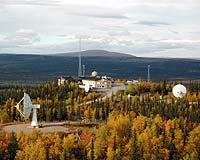
Esrange, Sweden (SPX) Sep 20, 2007 The SSC-developed communication system Telescience Support Unit (TSU) has been launched into space. The system is being used by the European Space Agency (ESA) onboard the Russian space capsule Foton M3. This is SSC's fourth delivery of a TSU for Foton, and this time, SSC's engineers have developed a new generation of the system. The TSU will store and process data from ten experiments onboard the capsule. The information will be transmitted to Esrange Space Center - SSC's facility in northern Sweden - from where the scientists can monitor and control their experiments. For these real-time studies, the new SSC software RAMSES will be used. In the beginning of April, the TSU system was delivered to ESTEC, ESA's research and technology centre in the Netherlands, where a Mission Simulation Test was performed. Some forty scientists took part in simulations of Foton's first and last three days in orbit. In the end of May, the TSU was flown to Samara in Russia for integration and tests in the Foton capsule. The capsule was then transported to Baikonur for final tests and launch. In Baikonur, all instruments onboard Foton M3 were checked to make sure they were intact after the transport. SSC's engineers on site have verified that the TSU works fine. It will now be submitted to numerous communication tests with the experiments. Community Email This Article Comment On This Article Related Links Space Technology News - Applications and Research
 Engineers Rescue Aging Satellites And Save Millions
 West Lafayette IN (SPX) Sep 11, 2007
Researchers have used a new technique to save $60 million for broadcasters by extending the service life of two communications satellites. The technique works by applying an advanced simulation and a method that equalizes the amount of propellant in a series of fuel tanks so that the satellite consumes all of the fuel before being retired from service. |
|
|

| The content herein, unless otherwise known to be public domain, are Copyright 1995-2007 - SpaceDaily.AFP and UPI Wire Stories are copyright Agence France-Presse and United Press International. ESA Portal Reports are copyright European Space Agency. All NASA sourced material is public domain. Additional copyrights may apply in whole or part to other bona fide parties. Advertising does not imply endorsement,agreement or approval of any opinions, statements or information provided by SpaceDaily on any Web page published or hosted by SpaceDaily. Privacy Statement |