|
 |
 |
 |
 |
 |
 |
 |
 |

 |
SOHO Sees Its 750th Comet
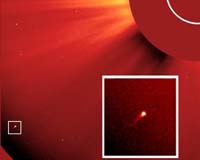
Paris - Apr 07, 2004 On 22 March 2004, the ESA/NASA SOHO solar observatory spacecraft discovered its 750th comet since its launch in December 1995. SOHO comet 750 was discovered by the German amateur astronomer Sebastian H�nig, one of the most successful SOHO comet-hunters. It was a part of the Kreutz family of 'sungrazing' comets, which usually evaporate in the hot solar atmosphere. The LASCO coronagraph on SOHO, designed for seeing outbursts from the Sun, uses a mask to block the bright rays from the visible surface. It monitors a large volume of surrounding space and, as a result, has become the most prolific 'discoverer' of comets in the history of astronomy. Its images are displayed on the internet. More than 75% of the discoveries have come from amateur comet hunters around the world, watching these freely available SOHO images on the internet. So, anyone with internet access can take part in the hunt for new comets and be a 'comet discoverer'! Click here for information about how to search for your own comet: http://ares.nrl.navy.mil/sungrazer/ SOHO is a mission of international co-operation between ESA and NASA, launched in December 1995. Every day SOHO sends thrilling images from which research scientists learn about the Sun's nature and behaviour. Experts around the world use SOHO images and data to help them predict 'space weather' events affecting our planet. Community Email This Article Comment On This Article Related Links SOHO SpaceDaily Search SpaceDaily Subscribe To SpaceDaily Express Asteroid and Comet Mission News, Science and Technology
 NASA'S Spitzer Finds Possible Comet Dust Around Dead Star
 Pasadena CA (SPX) Jan 12, 2006
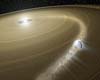
NASA's Spitzer Space Telescope has spotted what may be comet dust sprinkled around the white dwarf star G29-38, which died approximately 500 million years ago. |
|
|

| The content herein, unless otherwise known to be public domain, are Copyright 1995-2006 - SpaceDaily.AFP and UPI Wire Stories are copyright Agence France-Presse and United Press International. ESA PortalReports are copyright European Space Agency. All NASA sourced material is public domain. Additionalcopyrights may apply in whole or part to other bona fide parties. Advertising does not imply endorsement,agreement or approval of any opinions, statements or information provided by SpaceDaily on any Web page published or hosted by SpaceDaily. Privacy Statement |