|
 |
 |
 |
 |
 |
 |
 |
 |

 |
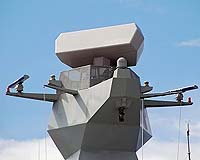
SMART-S Mk2 Sails Through its Finals
Hengelo, Denmark (SPX) Nov 05, 2007 The first SMART-S Mk2 surveillance radar, installed on the HDMS Absalon of the Royal Danish Navy, passed the Sea Acceptance Test (SAT) with flying colours. Overall conclusion: SMART-S Mk2 easily exceeded all requirements. In particular the requirement for low elevation tracking accuracy was typically exceeded by a factor 7. During the tests , SMART-S Mk2 was controlled through Absalon's third-party supplied CFlex Command and Control system. The SAT was held from 21 August until 30 August and took place in the littoral waters of Kattegat and in the vicinity of Bornholm. During the tests only three Thales engineers were on board of HDMS Absalon.
The SAT consisted of many separate tests with a great variety of targets: During the tests, several targets spontaneously presented themselves, e.g. a Polish submarine, Tornado jets from the German Air Force, Unmanned Aerial Vehicles from the Danish Armed Forces and a Fast Attack Craft of the Norwegian Navy. All tests were performed in both SMART-S Mk2 modes: the long range air surveillance mode and the shorter range, high update rate, defence mode, so effectively two radar systems were tested. Confidence in SMART-S Mk2 grew so high during the tests that the system was used operationally by the Danish navy. The high level of the radar's user-friendliness is demonstrated by the fact that the operators have yet to receive their training. The SMART-S Mk2 on board of the HDMS Absalon is the first ever built. The second one is being used at present for maintainer training in Hengelo. It will be shipped to Denmark at the end of 2007 to be installed on HDMS Esbern Snare and be subjected to its SAT in January 2008. Community Email This Article Comment On This Article Related Links The latest in Military Technology for the 21st century at SpaceWar.com
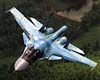
 Russian New-Generation Fighter Plane Set 2012 Deadline
 Moscow (RIA Novosti) Nov 05, 2007
Russia's new-generation fighter plane, currently being jointly developed with India, will make its maiden flight no later than in 2012, a senior Air Force official said on Tuesday. Russia and India signed an agreement on cooperation in the development and production of an advanced multi-purpose fighter aircraft on October 18. "The deadlines have been set - it [the fighter] must take to the skies in 2012 and enter service [with the Air Force] in 2015," said Lt. Gen. Igor Sadofyev, deputy commander of the Russian Air Force. |
|
|

| The content herein, unless otherwise known to be public domain, are Copyright 1995-2007 - SpaceDaily.AFP and UPI Wire Stories are copyright Agence France-Presse and United Press International. ESA Portal Reports are copyright European Space Agency. All NASA sourced material is public domain. Additional copyrights may apply in whole or part to other bona fide parties. Advertising does not imply endorsement,agreement or approval of any opinions, statements or information provided by SpaceDaily on any Web page published or hosted by SpaceDaily. Privacy Statement |