|
 |
 |
 |
 |
 |
 |
 |
 |

 |
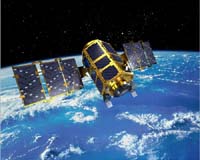
SKorea loses contact with first satellite: official
Seoul (AFP) Jan 5, 2008 South Korea has lost communication with its first multipurpose satellite launched in 1999, a state agency said Saturday. The Korea Aerospace Research Institute (KARI) confirmed its surface uplink with the Arirang 1 satellite was lost on December 30. "Our efforts to restore communication with the Arirang 1 satellite have been unsuccessful," an institute official said. Arirang 1 was launched on December 21, 1999 to take high-resolution photos of the Earth's surface. Yonhap news agency quoted a KARI expert as saying initial reviews pointed towards a possible machinery malfunction or a misalignment that may have affected power generation. "If the satellite loses proper alignment, its solar panels cannot generate power that is vital for the machine," the expert said. South Korea, a relatively slow starter in the space programme, has launched three commercial communications satellites since 1995. It launched its first military communications satellite in 2006. Community Email This Article Comment On This Article Related Links Space Technology News - Applications and Research
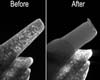
 Smaller Is Stronger - Now Scientists Know Why
 Berkeley CA (SPX) Jan 03, 2008
As structures made of metal get smaller - as their dimensions approach the micrometer scale (millionths of a meter) or less - they get stronger. Scientists discovered this phenomenon 50 years ago while measuring the strength of tin "whiskers" a few micrometers in diameter and a few millimeters in length. Many theories have been proposed to explain why smaller is stronger, but only recently has it become possible to see and record what's actually happening in tiny structures under stress. |
|
|

| The content herein, unless otherwise known to be public domain, are Copyright 1995-2007 - SpaceDaily.AFP and UPI Wire Stories are copyright Agence France-Presse and United Press International. ESA Portal Reports are copyright European Space Agency. All NASA sourced material is public domain. Additional copyrights may apply in whole or part to other bona fide parties. Advertising does not imply endorsement,agreement or approval of any opinions, statements or information provided by SpaceDaily on any Web page published or hosted by SpaceDaily. Privacy Statement |