|
 |
 |
 |
 |
 |
 |
 |
 |

 |
SIA Urges FCC To Limit Damage Caused By Radar Detectors
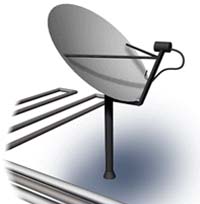
Washington - Feb 13, 2002 Today, the Satellite Industry Association ("SIA") urged the Federal Communications Commission to take swift action to limit the harmful interference caused by radar detectors to many Very Small Aperture Terminal (VSAT) networks. Current radar detectors are emitting power levels that are greatly in excess of the norms established by the FCC for unlicensed devices. As a result, these devices are disrupting vital communication links that thousands of businesses, consumers, and safety services rely on every day. "This situation is intolerable," said SIA Executive Director, Richard DalBello. "These devices - which are illegal in many states - are operating in a manner that is flatly inconsistent with Commission rules and are imposing an unacceptable financial burden on VSAT operators." The SIA letter points out that a radar detector in an automobile passing by or parked near a VSAT terminal or other satellite earth station can easily break the satellite communications link. The primary satellite operations affected by radar detectors are VSAT systems - the small, easily deployed earth stations used for a host of consumer, corporate, and government applications. Corporations use VSATs for data transmission, inventory management, point-of-sale data collection, credit card validation and email delivery. VSATs provide consumers a variety of services including "pay-at-the-pump" gasoline and secure ATM withdrawals from banks. VSATs are also used for critical operations such as tele-medicine, disaster recovery, law enforcement, as well as rural telecommunications and distance learning. The damage caused by radar detectors is not limited to VSAT networks. Radar detectors have also caused harmful interference to other satellite operations, including mission critical functions such as satellite tracking, telemetry and control, for which the loss of a single antenna for even a limited period can have catastrophic consequences. SIA is a national trade association representing the leading U.S. satellite manufacturers, service providers, and launch service companies. SIA serves as an advocate for the U.S. commercial satellite industry on regulatory and policy issues common to its members. With member service companies providing a broad range of manufactured products and services, SIA represents the unified voice of the U.S. commercial satellite industry. Community Email This Article Comment On This Article Related Links Satellite Industry Association SpaceDaily Search SpaceDaily Subscribe To SpaceDaily Express VSAT News - Suppliers, Technology And Applications
 SkyTerra Announces Plans To Separate Into Two Public Companies
 New York (SPX) Sep 23, 2005
SkyTerra Communications announced Thursday that it plans to separate into two publicly owned companies: SkyTerra, which would solely hold SkyTerra's current stake in each of Mobile Satellite Ventures and TerreStar Networks; and a newly formed entity that would own all of SkyTerra's other assets including its managing interest in Hughes Network Systems. |
|
|

| The content herein, unless otherwise known to be public domain, are Copyright 1995-2006 - SpaceDaily.AFP and UPI Wire Stories are copyright Agence France-Presse and United Press International. ESA PortalReports are copyright European Space Agency. All NASA sourced material is public domain. Additionalcopyrights may apply in whole or part to other bona fide parties. Advertising does not imply endorsement,agreement or approval of any opinions, statements or information provided by SpaceDaily on any Web page published or hosted by SpaceDaily. Privacy Statement |