|
 |
 |
 |
 |
 |
 |
 |
 |

 |
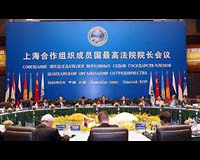
SCO Members To Co-Op In Combating "Three Evil Forces"
Shanghai, China (XNA) Sep 22, 2006 The presidents of the supreme courts of Shanghai Cooperation Organization (SCO) member states discussed on Thursday a cooperative legal mechanism to combat increasing cross-border crime, especially the "three evil forces" of terrorism, extremism and separatism. "SCO members share the responsibility for fighting cross-border crime, including the 'three evil forces', because the region's security and stability are being threatened," said Xiao Yang, president of China's Supreme People's Court. The regional group consists of China, Kazakhstan, Kyrgyzstan, Russia, Tajikistan and Uzbekistan. Founded on June 15, 2001, when the six heads of state signed the Shanghai Pact, the SCO is a major international anti-terrorist organization. In the past five years, the SCO has carried out extensive defense and security activities. Apart from battling the "three evil forces", the SCO has led a crackdown on drug trafficking and related crimes such as money laundering and weapons smuggling. The Chinese government attaches great importance to judicial cooperation within the Shanghai Cooperation Organization (SCO) framework and will work with other SCO members to enhance it, said President Hu Jintao in a congratulatory letter sent to the first SCO supreme court presidents conference, which opened Thursday in Shanghai. Hu said judicial cooperation was an important part of SCO work. Exchanges and cooperation among the supreme courts of SCO member states were of great importance in preventing and cracking down on cross-border crime and on the "three evil forces" of terrorism, extremism and separatism, and in advancing peace and development in the region.
All SCO members should set up a comprehensive mechanism to combat cross-border crime. The courts must be involved in the process, said Vyacheslav Lebedev, the head of the Russian Supreme Court.
China Urges Tougher Counter Terrorism Measures At SCO Meet In remarks to be delivered Friday, the vice director of China's Supreme Court, Jun Zhang, said, "guarding and punishing terrorism, separatism and extremism and other transnational crimes" must be "strengthened". Throughout the world, "particularly terrorist activities being carried out under the flag of separatism and extremism were rampant," he said in the advanced copy of his speech seen by AFP. These, money laundering and transnational crimes must be considered "severe criminal acts," Zhang plans to tell the group founded five years ago by China and Russia that includes Kazakhstan, Uzbekistan, Kyrgyzstan and Tajikistan. Acts of terrorism, separatism or extremism should be subject to extradition and not be hamstrung due to political reasons, Zhang said, in apparent reference to criticism that Beijing uses the fight against terrorism to snuff out enemies of the ruling communist party. "Opposing terrorism cannot have double standards... No country, party or group can treat the problem of terrorism based on their political positions or other self-beneficial objectives," Zhang said. Human rights campaigners have criticized the organization for helping to repress opposition political activists in the member countries through such practices as extra-judicial transfer of suspects between countries. Beijing has cracked down own its own ethnic Uighur Muslims living in northwest China's Xinjiang region, many who have agitated for a return to the brief independence it enjoyed until 1955 as East Turkestan. The SCO grew out of a regional effort in the mid-1990s to reduce military forces among common borders. It later came to involve anti-terrorism efforts and cooperation in the economic and energy fields. The organization is China's most concerted effort at promoting a regional multilateral forum, but some Western critics say it is ultimately aimed at countering US influence in Central Asia.
Source: Xinhua News Agency
Source: Agence France-Presse Community Email This Article Comment On This Article Related Links News and analysis about the Global War Against Terror at SpaceWar.com The Long War - Doctrine and Application
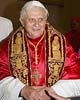
 The Misguided Retreat Of The Pope
 Berlin (UPI) Sep 21, 2006
The pope might have been able to offer a meaningful contribution to the current schism between Islam and the West. Instead, he poured oil on the flame during a speech in Regensburg, Germany. Nonetheless, he should have stuck by his guns and defended his point of view. |
|
|

| The content herein, unless otherwise known to be public domain, are Copyright 1995-2006 - SpaceDaily.AFP and UPI Wire Stories are copyright Agence France-Presse and United Press International. ESA PortalReports are copyright European Space Agency. All NASA sourced material is public domain. Additionalcopyrights may apply in whole or part to other bona fide parties. Advertising does not imply endorsement,agreement or approval of any opinions, statements or information provided by SpaceDaily on any Web page published or hosted by SpaceDaily. Privacy Statement |