|
 |
 |
 |
 |
 |
 |
 |
 |

 |
SAfrica recalls 20 million condoms after safety scandal
Johannesburg (AFP) Aug 27, 2007 The South African government issued a recall notice on Monday for 20 million condoms after a scandal which saw safety certificates allegedly issued for defective contraceptives. The health ministry said that all 20 million of the condoms so far supplied by Zalatex as part of a government-funded distribution programme were being recalled "as a precautionary measure to ensure maximum safety of the public." "The department of health has already quarantined close to 3.6 million condoms produced by the company and these condoms are currently stored at various warehouses in the country," a statement said. "The department of health urges the members of the public and all partners involved in the condom distribution programme to return the condoms produced by the company to their nearest condom outlet." An officials workin for the South African Bureau of Standards (SABS), which issues certificates, has already been charged in connection with the scandal. The employee is said to have received a bribe in order to approve condoms which were of a substandard quality. Zalatex and the condoms' producers Latex Surgical Products (LSP) had been hired by the government to supply around 80 million condoms. South Africa has the second highest number of HIV patients in the world after India, with around five million of the 48 million population living with the disease. Community Email This Article Comment On This Article Related Links Epidemics on Earth - Bird Flu, HIV/AIDS, Ebola
 Nanoparticle Could Help Detect Many Diseases Early
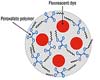 Atlanta GA (SPX) Aug 21, 2007
Most people think of hydrogen peroxide as a topical germ killer, but the medicine cabinet staple is gaining steam in the medical community as an early indicator of disease in the body. Georgia Institute of Technology and Emory University researchers are the first to create a nanoparticle capable of detecting and imaging trace amounts of hydrogen peroxide in animals. |
|
|

| The content herein, unless otherwise known to be public domain, are Copyright 1995-2007 - SpaceDaily.AFP and UPI Wire Stories are copyright Agence France-Presse and United Press International. ESA Portal Reports are copyright European Space Agency. All NASA sourced material is public domain. Additional copyrights may apply in whole or part to other bona fide parties. Advertising does not imply endorsement,agreement or approval of any opinions, statements or information provided by SpaceDaily on any Web page published or hosted by SpaceDaily. Privacy Statement |