|
 |
 |
 |
 |
 |
 |
 |
 |

 |
Russians To Launch First Two Of EU's Galileo GPS Satellites
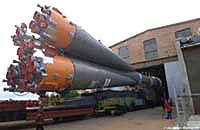
Paris (AFP) Mar 03, 2004 The Soviet-era workhorse of space, the Soyuz, has been chosen to launch the first two Galileo satellites, the European Union's answer to the US Global Positioning System (GPS), Arianespace announced on Wednesday. Arianespace, which carries out launches for the European Space Agencyand commercial clients, said it had signed an agreement with Starsem, which markets Soyuz launches. The first two satellites will be experimental, designed to test the orbital positions and communication frequencies of the Galileo constellation. The first launch will take place from Baikonur, Kazakhstan, "by the end of 2005," Arianespace said in a statement received here. It did not say when the second would take place. Galileo, scheduled to be operational by 2008, is designed to encircle the globe with 30 satellites in medium Earth orbit, comprising 27 operational satellites and three backups, plus two control centres on the ground. It should provide users, ranging from aircraft and shipping to cars and trekkers, with a navigational fix accurate to within just one metrefeet). At present, the only global satellite navigation system available to civilians is the US Global Positioning System (GPS), but it is accurate only to 100 metres (325 feet) for civilians, or 22 metres (71 feet) for the military, and is under the control of the Pentagon. The European Union and the United States last week cleared the major hurdles in a dispute over Galileo that had held up the project for some two years. Washington's main contention was that Galileo's signals could disrupt military applications of the GPS. Starsem's shareholders are the Russian Aviation and Space Agency, the Samara Space Centre, Arianespace and the European aerospace consortium. The company broke ground last year by launching ESA's Mars Express, and the Soyuz system is due to be deployed at Europe's space pad in Kourou, French Guiana, giving a medium-range launch capability to Arianespace. Galileo is a joint initiative by the EU and ESA that has attracted several other countries, notably China. Community Email This Article Comment On This Article Related Links SpaceDaily Search SpaceDaily Subscribe To SpaceDaily Express GPS Applications, Technology and Suppliers
 Galileo GIOVEA Using Marotta Equipment For Its Propulsion Systems
 Cheltenham, England (SPX) Jan 09, 2006
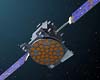
Marotta UK is pleased to announce that it designed, developed and qualified equipment for the cold gas propulsion systems on board the Galileo GIOVE-A, part of Europe's Galileo navigation program, successfully launched by Surrey Satellite Technology (SSTL). |
|
|

| The content herein, unless otherwise known to be public domain, are Copyright 1995-2006 - SpaceDaily.AFP and UPI Wire Stories are copyright Agence France-Presse and United Press International. ESA PortalReports are copyright European Space Agency. All NASA sourced material is public domain. Additionalcopyrights may apply in whole or part to other bona fide parties. Advertising does not imply endorsement,agreement or approval of any opinions, statements or information provided by SpaceDaily on any Web page published or hosted by SpaceDaily. Privacy Statement |