|
 |
 |
 |
 |
 |
 |
 |
 |

 |
Russian Space Launch Vehicle Firing Tests Set For 2008
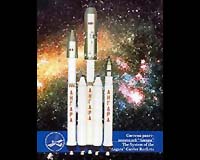
Moscow, Russia (RIA Novosti) Sep 20, 2007 The Angara space launch vehicle first stage firing tests will take place in 2008, the Khrunichev State Research and Production Center web site said Wednesday. Colonel General Vladimir Popovkin, commander of Russia's Space Forces, said earlier the Angara flight tests were scheduled for the fourth quarter of 2010. He also said the booster would be launched in the first quarter of 2011. The general added that all Angara works "have been coordinated and let us confidently say the flight tests will begin as scheduled". Popovkin said all the launch vehicle ground facilities were to be complete in July-August 2010. He also said all-round tests, preliminary tests, and a half-year long adjustment works to follow were scheduled for September 2010. Angara is a booster with light-weight, medium, and heavy-lift derivatives. The maximum launch weight is 773 metric tons, payload up to 24.5 tons, orbit altitude 200km. Angara is designed to complement, and eventually replace, the existing line of Rokot and Proton boosters. Russian President Vladimir Putin has dismissed the former head of the Khrunichev State Research and Production Center, and the constructor of Angara, following a number of launch failures compromising the country's space program.
Source: RIA Novosti Community Email This Article Comment On This Article Related Links Launch Pad at Space-Travel.com
 Pratt And Whitney Rocketdyne's RS-27A Powers New-Gen Imaging Satellite To Orbit
 Canoga Park CA (SPX) Sep 20, 2007
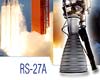
A Pratt and Whitney Rocketdyne RS-27A boosted a United Launch Alliance Delta II rocket into space today from Vandenberg Air Force Base in California. The rocket carried WorldView-1, the first of two next-generation satellites that are part of the National Geospatial-Intelligence Agency's NextView program. Pratt and Whitney Rocketdyne is a United Technologies Corp. company. |
|
|

| The content herein, unless otherwise known to be public domain, are Copyright 1995-2007 - SpaceDaily.AFP and UPI Wire Stories are copyright Agence France-Presse and United Press International. ESA Portal Reports are copyright European Space Agency. All NASA sourced material is public domain. Additional copyrights may apply in whole or part to other bona fide parties. Advertising does not imply endorsement,agreement or approval of any opinions, statements or information provided by SpaceDaily on any Web page published or hosted by SpaceDaily. Privacy Statement |