|
 |
 |
 |
 |
 |
 |
 |
 |

 |
Russian Space Capsule Lands 260 Miles Away From Target Site
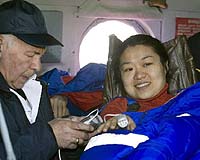
Moscow (RIA Novosti) Apr 21, 2008 Russia's space capsule carrying International Space Station crew landed 420 km (260 miles) away from the target site in northern Kazakhstan, but the crew are safe, Mission Control said Saturday. The Soyuz-TMA-11 capsule carried U.S. astronaut Peggy Whitson, Russian flight engineer Yury Malenchenko, and bioengineer Yi So-yeon - the first South Korean that traveled to the ISS. Tests showed their health was satisfactory. The spacecraft was to have landed to the north of the town of Artalyk, but it landed near the Kazakh-Russian border, southeast of the Russian town of Orsk, because of a "ballistic reentry" scheme. During a ballistic landing, the capsule follows a much steeper descent trajectory, and gravitational forces the crew experience are way higher. "The main thing is that the crew are safe and sound. It was a ballistic descent. The specific reasons will be known after the craft is delivered to the Energia rocket and space corporation," Anatoly Perminov, the head of the Russian Federal Space Agency, said. Asked by journalists why Mission Control learned about the ballistic descent mode only after the landing was completed, Perminov said: "The crew in the descent capsule did not report during a communication session that they had followed a ballistic trajectory." The incident will be investigated. In October 2007, a Soyuz capsule carrying Malaysia's first astronaut also followed a steeper trajectory during descent. In 2003, after another descent that went wrong, the crew had to wait for a few hours until rescuers were able to locate them.
Source: RIA Novosti
related report The Soyuz capsule landed in the Kazakh steppe at 12:51 Moscow time (0851GMT), 20 minutes later than the planned time and 420 km from the planned landing site, the Misson Control said. Rescue and search groups have evacuated the cosmonauts from the capsule. The cosmonauts are safe and sound, federal space agency head Anatoly Perminov told a press conference at the Mission Control. Whitson and Malenchenko have worked in orbit for more than 191 days, while Yi, a 29-year-old biosystems engineer, arrived at the ISS on April 10 together with Sergei Volkov and Oleg Kononenko, the ISS Expedition 17 crew who will work in orbit till next autumn. The capsule descended a ballistic descent path. It is an envisaged landing case, but the cosmonauts could feel high acceleration force, experts said. Ballistic path returning is a rare case, which happened only twice in the ISS history - in 2003 and 2007.
Source: Xinhua News Agency Community Email This Article Comment On This Article Related Links Space Tourism, Space Transport and Space Exploration News
 Electric Sail Invention Approaches Implementation
 Helsinki, Finland (SPX) Apr 16, 2008
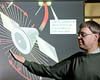
The electric solar wind sail developed at the Finnish Meteorological Institute has moved in a rapidly pace from invention towards implementation. Electric sail propulsion might have a large impact on space research and moving in space more generally. The electric solar wind sail developed by Dr. Pekka Janhunen at the Finnish Meteorological Institute might revolutionise moving around in deep space. |
|
|

| The content herein, unless otherwise known to be public domain, are Copyright 1995-2007 - SpaceDaily.AFP and UPI Wire Stories are copyright Agence France-Presse and United Press International. ESA Portal Reports are copyright European Space Agency. All NASA sourced material is public domain. Additional copyrights may apply in whole or part to other bona fide parties. Advertising does not imply endorsement,agreement or approval of any opinions, statements or information provided by SpaceDaily on any Web page published or hosted by SpaceDaily. Privacy Statement |