|
 |
 |
 |
 |
 |
 |
 |
 |

 |
Russian Ecologists Despair Over Lack Of Govt Vision
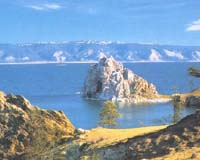
Moscow (AFP) May 09, 2006 Russian environmentalists heaved a collective sigh of relief when President Vladimir Putin ordered a change in the route of a new oil pipeline to reduce the danger of it polluting Lake Baikal, one of the great ecological wonders of the world. For there were fears that the pipeline could threaten the oldest and deepest lake in the world, which contains 20 percent of the world's total unfrozen fresh water reserve and some of the world's most unusual fresh water flora and fauna. Last month Putin ordered that the pipeline be re-routed further away. Construction starts this summer. But one swallow at Lake Baikal does not a summer make, say frustrated Russian environmentalists. They have no doubt that Putin's action was just a publicity exercise, and remain pessimistic about the ecology of the world's largest country. "Nobody is fooled," said Vladimir Chuprov, chairman of the Russian branch of the environmental group Greenpeace. "Putin's decision was good for the environment, but it was only one isolated deed which does not foreshadow any change in the government's ecological policy." Greens recall that Putin in 2000 wound up the ecology ministry and ended school classes in environmentalist awareness. "People are no longer being informed at all," said Alexei Yablokov, head of the Greens movement Zelionaya Rossiya. The ecologists all say the same thing: their poor public impact is due to a deliberate Kremlin policy of "de-environmentalisation," a neologism thought up by Yablokov. "It's extremely difficult for us to obtain access to the media," said Chuprov, "That's why we're so poorly mobilised." "The government thinks only in terms of exploiting natural resources to the maximum extent without thinking of long-term effects," said Yablokov. "The country's ecological situation is now worsening on a catastrophic scale." The authorities, uncommunicative on environmental issues, have been trying to minimise the gravity of the situation. But Yablokov says concrete evidence of a worsening situation can be seen in Russia's population crisis, with an an annual drop of some 800,000. "Between 300,000 and 350,000 deaths every year are due to ecological problems," he claimed. In the last 20 years, male life expectancy in Russia has indeed gone down to 58 years of age. Yet the average Russian appears to be blithely indifferent to the ecology crisis. Despite illness, air and water pollution and the gradual extinction of divers animal species, most people appear unperturbed and indifferent to what many consider "rich countries'problems." The most influential environmental protection groups number only a few hundred members throughout the entire country. And the only political environmental organisation, the Greens, remains marginalised, having so far failed since it was set up last year to attract the 50,000 members required to register as a political party. "Getting into politics in Russia means of necessity serving Putin," said Vladimir Sliviak, head of a radical group called Ecozashchita, or Eco-Defence.) "And that means there will be no progress on the environment." Meanwhile the authorities have strengthened controls over non-governmental organisations. Last month a law on non-commercial groups was revised, obliging them in future to account in advance for their future projects as well as for current activities. Failure to comply could mean a ban. "We're now spending so much time filling in official documents that our work is seriously hampered," said Sliviak. The success at Baikal was, in environmentalists' eyes, just one faint gleam in an otherwise dark horizon. Lake Baikal, classified by the United Nations Educational, Cultural and Scientific Organisation (UNESCO) as a world heritage centre, was considered seriously under threat from the planned Siberia-Pacific pipeline. The project was originally planned to run only 800 metres (yards) from the lake at one point. It will now run at least 40 kilometres (25 miles) further north. The region is notorious for earthquakes and environmentalists had protested that the pipeline posed a major pollution threat. Critics said as much as 4,000 tonnes of oil could be discharged into the lake if there were an earthquake.
Source: Agence France-Presse Community Email This Article Comment On This Article Related Links - Our Polluted World and Cleaning It Up
 China Says River Clean After Thaw
 Beijing (AFP) May 09, 2006
Melting ice has not caused a second wave of pollution in China's Songhua River following a major chemical leak last year, the nation's environmental watchdog said Monday. |
|
|

| The content herein, unless otherwise known to be public domain, are Copyright 1995-2006 - SpaceDaily.AFP and UPI Wire Stories are copyright Agence France-Presse and United Press International. ESA PortalReports are copyright European Space Agency. All NASA sourced material is public domain. Additionalcopyrights may apply in whole or part to other bona fide parties. Advertising does not imply endorsement,agreement or approval of any opinions, statements or information provided by SpaceDaily on any Web page published or hosted by SpaceDaily. Privacy Statement |