|
 |
 |
 |
 |
 |
 |
 |
 |

 |
Russia launches military satellite: agencies
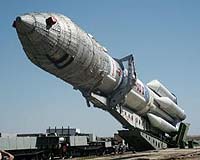
Moscow (AFP) Dec 9, 2007 Russia successfully launched a military satellite on Sunday from the Baikonur cosmodrome, part of a drive to modernise the armed forces' space infrastructure, Russian news agencies reported. The Kosmos satellite was launched aboard a Proton-M rocket and was successfully released into the correct orbit, ITAR-TASS quoted a spokesman for the military's space division, Alexei Zolotukhin, as saying. "We have established stable communications with the satellite. The Kosmos 2434 satellite is functioning normally," he said. Russia's military has just over 60 orbiting satellites, which "encompass all kinds of military functions from communications to reconnaissance," ITAR-TASS quoted the head of the space division, General Vladimir Popovkin, as saying earlier. The latest generation of military satellites have a minimum lifespan of between seven and 15 years depending on their orbit, he said. In September a Proton-M rocket crashed upon launching from the Baikonur base in Kazakhstan. This prompted a dispute over environmental compensation between Russia and the Kazakh authorities, which rent the iconic cosmodrome to Moscow. Designed for military and civilian use, including for firing nuclear warheads, the Proton rocket is powered by a hypergolic fuel that allows instantaneous launching and is also highly toxic, just a few drops being deadly to humans. Community Email This Article Comment On This Article Related Links Read the latest in Military Space Communications Technology at SpaceWar.com
 Harris Tests New Falcon III Multiband Manpack Radio During US Army Patriot Missile Exercise
 Rochester NY (SPX) Dec 06, 2007
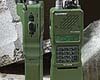
Harris has successfully demonstrated its new Falcon III multiband manpack radio during a 10-day U.S. Army exercise that focused on integrating new networking technologies into the Patriot missile communications system. The U.S. Army exercise is part of a transformational Army program designed to prepare Patriot to be part of the next-generation Army Integrated Air and Missile Defense - System of Systems. |
|
|

| The content herein, unless otherwise known to be public domain, are Copyright 1995-2007 - SpaceDaily.AFP and UPI Wire Stories are copyright Agence France-Presse and United Press International. ESA Portal Reports are copyright European Space Agency. All NASA sourced material is public domain. Additional copyrights may apply in whole or part to other bona fide parties. Advertising does not imply endorsement,agreement or approval of any opinions, statements or information provided by SpaceDaily on any Web page published or hosted by SpaceDaily. Privacy Statement |