|
 |
 |
 |
 |
 |
 |
 |
 |

 |
Russia could couter US with missiles in Belarus: general
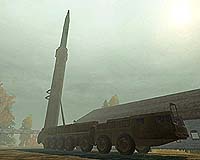
Moscow (AFP) Nov 14, 2007 Russia could counter a planned US anti-missile defence system in central Europe by deploying missiles in neighbouring ally Belarus, a senior Russian general said Wednesday. "Why not, given the appropriate conditions and appropriate position of Belarus?" General Vladimir Zaritsky, the head of Russia's missile and artillery forces, was quoted as saying by Russian news agencies. "Any action must have a counter-action, including with the US anti-missile elements in the Czech Republic and Poland," he said. Belarus, a close ally of Russia which borders Poland, said earlier Wednesday that it was purchasing Russia's Iskander-E conventional missile system by 2020, which is designed to destroy air defences, but has a range of just 280 kilometres (174 miles). An updated version of the missile, the Iskander-M, can be adapted for a range of 500 kilometres (310 miles). That is currently forbidden under the terms of the Cold War-era INF treaty, which scrapped missiles with a range of 500-5,500 kilometres (310-3,417 miles). However last month President Vladimir Putin warned that Russia could tear up the treaty if Washington goes ahead with its anti-missile shield plans. Zaritsky said the Iskander could quickly be adapted for the longer range: "If the political decision is taken to leave the (INF) treaty, we will increase the military capabilities of the complex, including its range." Washington says it needs the missile shield in Poland and the Czech Republic to defend against possible threats from Iran, insisting that the limited system could not threaten Russia's vast nuclear arsenal. However, Moscow describes the plan as a threat to its nuclear deterrent. Community Email This Article Comment On This Article Related Links Learn about nuclear weapons doctrine and defense at SpaceWar.com Learn about missile defense at SpaceWar.com All about missiles at SpaceWar.com Learn about the Superpowers of the 21st Century at SpaceWar.com
 US has no good option in a Pakistan nuclear 'nightmare'
 Washington (AFP) Nov 13, 2007
The US armed forces are virtually powerless to prevent Pakistan's nuclear arsenal from falling into Islamist hands if the political crisis in Islamabad spins out of control, analysts warned. |
|
|

| The content herein, unless otherwise known to be public domain, are Copyright 1995-2007 - SpaceDaily.AFP and UPI Wire Stories are copyright Agence France-Presse and United Press International. ESA Portal Reports are copyright European Space Agency. All NASA sourced material is public domain. Additional copyrights may apply in whole or part to other bona fide parties. Advertising does not imply endorsement,agreement or approval of any opinions, statements or information provided by SpaceDaily on any Web page published or hosted by SpaceDaily. Privacy Statement |