|
 |
 |
 |
 |
 |
 |
 |
 |

 |
Russia To Carry Out Up To 20 Space Projects By 2015
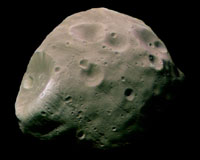
Moscow (RIA Novosti) Oct 05, 2007 Under the Federal space program for 2006-2015 Russia plans to conduct over 20 scientific projects, Russian Federal Space Agency (Roskosmos) head Anatoly Perminov told Thursday "In particular, we have plans to build special-purpose spacecraft fitted with scientific equipment. The research will focus on fields like astrophysics, and planetary science," he said. He said that planned flights included to Phobos, the Mars satellite, and to the Moon. The Roskosmos head also said that the Russian biological satellite Foton-M, which landed on September 27, 2007, conducted over 70 experiments while in space. "Space and science are mutually dependent and virtually inseparable today," he said. Commenting on the first Russian satellite launch in 1957 Perminov said it was an outstanding technical achievement opening up the era of satellite use, both in Russia and abroad. "We are very proud that our country was the first. Our current space potential is sufficient for all areas of space research and exploration activity, from spacecraft development to the result, leading into orbit," he added. "The fundamental research performed within the short period [50 years] has changed our view of the world," he said. Perminov added he had signed an order to award over 100 scientists at the Russian Academy of Science with Roskosmos medals.
Source: RIA Novosti Community Email This Article Comment On This Article Related Links Station and More at Roscosmos S.P. Korolev RSC Energia Russian Space News
 The Discovered Space
 Moscow (RIA Novosti) Oct 04, 2007
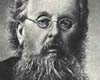
2007 sees four space related anniversaries: 150 years since the birth of Konstantin Tsiolkovsky, the theoretician of cosmonautics, who translated the bold dream of space flight into maths; 110 years since the birth of Alexander Chizhevsky, the founder of geliobiology, a new field of research into the influence of solar and geomagnetic activity on living beings; 100 years since the birth of Sergei Korolyov, who put cosmonautics on a practical plane, and 50 years since the start of the space era, ushered in by the launch of the Earth's first artificial satellite. |
|
|

| The content herein, unless otherwise known to be public domain, are Copyright 1995-2007 - SpaceDaily.AFP and UPI Wire Stories are copyright Agence France-Presse and United Press International. ESA Portal Reports are copyright European Space Agency. All NASA sourced material is public domain. Additional copyrights may apply in whole or part to other bona fide parties. Advertising does not imply endorsement,agreement or approval of any opinions, statements or information provided by SpaceDaily on any Web page published or hosted by SpaceDaily. Privacy Statement |