|
 |
 |
 |
 |
 |
 |
 |
 |

 |
Russia Launches Proton Carrier Rocket After The Ban
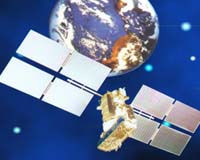
Moscow (RIA Novosti) Oct 29, 2007 Russia has successfully conducted a delayed launch of a Proton carrier rocket from the Baikonur space center in Kazakhstan, the Federal Space Agency (Roskosmos) said Friday. The Proton K rocket, which has been on the launch pad since Monday, lifted off at 11.35 a.m. Moscow time (7.35 a.m. GMT) and put in orbit three Glonass global navigation satellites, the space agency said. Kazakhstan lifted a ban Wednesday on Proton launches from the Baikonur space center, which Russia rents from the ex-Soviet Central Asian country. The ban was imposed following a September 6 crash of a Proton-M rocket for which Kazakhstan is seeking 1.5 billion rubles ($60 million) in compensation. The Proton is a heavy rocket which uses highly toxic heptyl as fuel. The rocket that crashed last month was carrying almost 219 metric tons of the fuel at the time of the crash, which contaminated a 32,000-hectare area of land. Kazakh authorities said on October 15 that they had completed decontamination work at the crash site. Glonass (Global Navigation Satellite System) is a Russian equivalent of the U.S. Global Positioning System (GPS), which is designed for both military and civilian use, and allows users to identify their positions in real time. A total of 9.88 billion rubles ($380 million) was allocated for Glonass from the federal budget in 2007, and 4.7 billion ($181 million) in 2006. A full orbital group of 24 satellites will be ready for global coverage by the end of 2009, Roskosmos said earlier.
Source: RIA Novosti Community Email This Article Comment On This Article Related Links GPS Applications, Technology and Suppliers
 EU's Galileo satnav scheme needs millions more next year: MEPs
 Strasbourg (AFP) Oct 25, 2007
The EU's troubled Galileo satellite navigation network, meant to rival the US Global Positioning System (GPS), needs millions more euros next year than planned, European MPs warned Thurdsay. |
|
|

| The content herein, unless otherwise known to be public domain, are Copyright 1995-2007 - SpaceDaily.AFP and UPI Wire Stories are copyright Agence France-Presse and United Press International. ESA Portal Reports are copyright European Space Agency. All NASA sourced material is public domain. Additional copyrights may apply in whole or part to other bona fide parties. Advertising does not imply endorsement,agreement or approval of any opinions, statements or information provided by SpaceDaily on any Web page published or hosted by SpaceDaily. Privacy Statement |