|
 |
 |
 |
 |
 |
 |
 |
 |

 |
Russia Launches German Military Spy Satellite
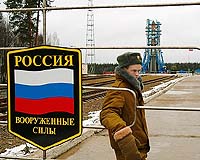
Moscow (RIA Novosti) (SPX) Dec 19, 2006 A Russian Cosmos 3M booster launched from the Plesetsk space center in northern Russia has put Germany's SAR-Lupe satellite into orbit, a spokesman for the Space Forces said Tuesday. The satellite was put into orbit at 5.28 p.m. Moscow time (2.28 p.m. GMT). "This is the first time Russia is launching a German military spacecraft," spokesman Alexei Kuznetsov said earlier. In 2003, Russia's state arms exporter Rosoboronexport and German COSMOS International Satellitenstart Gmbh (a subsidiary of OHB Systems AG) signed a contract on the launch of five SAR-Lupe satellites until 2009. The German satellite system is designed to provide high-resolution radar images to NATO military commanders in Europe. It offers spatial resolution of less than 1 meter, and allows imaging at night and through clouds. The Cosmos-3M is a liquid-fueled two-stage rocket, first launched in 1967, with over 410 successful launches to date. The booster has been designed to lift a payload of up to 1500 kg (3,300 lbs) into low, medium and high orbits.
earlier related report The first contact between the control center and the satellite was established at 16:04 hours Central European Time. A preliminary review of all main functions showed that the satellite can now be put in operation. Satellite control is currently in the hands of the German Space Agency DLR in Oberpfaffenhofen. The ground station of the German Armed Forces in Gelsdorf is tracking the satellite at the same time and will assume operative responsibility for it in mid January, at which point in time it will start collecting SAR radar images.
SAR-Lupe system SAR-Lupe is Germany's first satellite-based reconnaissance system. It comprises five identical small satellites and a ground segment for managing the satellites and receiving and processing the radar images. As the principal contractor of the German Federal Office of Defense Technology and Procurement (BWB), OHB-System developed the overall system and oversaw a consortium of well-known European space technology companies. The first German radar satellite was transported to the Russian launch pad at the beginning of December after undergoing extensive testing at the Ottobrunn satellite testing center. The four other satellites will be launched in intervals of four to six months. SAR-Lupe will be forming part of the European Reconnaissance System. Under the ESGA project (German acronym for "Europeanization of Satellite-Based Reconnaissance"), OHB-System is creating the technical basis for allowing France to use the German SAR-Lupe radar system. In return, Germany will be able to access the French optical HELIOS II system.
Source: RIA Novosti Community Email This Article Comment On This Article Related Links Rosoboronexport COSMOS International Satellitenstart Gmbh Launch Pad at Space-Travel.com Military Space News at SpaceWar.com Military Space News at SpaceWar.com
 US Policy Aims To Safeguard Expand Peaceful Use Of Space
 Washington DC (SPX) Dec 15, 2006
The United States is committed to safeguarding and expanding the peaceful uses of space, a senior State Department official says. Speaking December 13 about the U.S. National Space Policy, Robert Joseph, the under secretary of state for arms control and international security, said the U.S. commitment to exploring and using outer space "by all nations for peaceful purposes and for the benefit of all humanity" is the first principle of that policy. |
|
|

| The content herein, unless otherwise known to be public domain, are Copyright 1995-2006 - SpaceDaily.AFP and UPI Wire Stories are copyright Agence France-Presse and United Press International. ESA PortalReports are copyright European Space Agency. All NASA sourced material is public domain. Additionalcopyrights may apply in whole or part to other bona fide parties. Advertising does not imply endorsement,agreement or approval of any opinions, statements or information provided by SpaceDaily on any Web page published or hosted by SpaceDaily. Privacy Statement |