
 |
 |
 |
 |
 |
 |
 |
 |
 |

 |
Rotary Powers Up For LEO Market
Mojave - December 3, 1998 � Rotary Rocket successfully tested its "whirl tower" during rotor ground tests in early November. The whirl tower is being used to ground test and qualify the rotor landing system for the Roton piloted space vehicle. During the tests the acceleration was described as good and the pilot "flew" the four-bladed rotor with the cyclic and pronounced it controllable and responsive up to its automatic shut-down limit, preset for the initial test at 75 rpm. Subsequent tests will exercise the rotor system throughout its planned operational range. All 4 tip thrusters functioned nominally throughout the test. Each tip thruster, fueled by hydrogen peroxide, is continuously throttleable up to a maximum thrust of 350 lbf. The tip thrusters will be used to speed-up the rotor just before landing. This will enable the Roton to come to a complete stop before gently touching down. The tip thrusters have been put through an extensive static qualification program before being mounted on the rotor. Rotary Rocket Company�s Roton piloted space vehicle will have a crew of two and will serve the LEO telecommunications satellite market, a more than $10 billion market, at a fraction of the price of existing commercial rockets. The Roton uses the latest technology comprising advanced composite fuel tanks, innovative engines and streamlined operations�technology that will enable a dozen or so ground crew to prepare the Roton for reflight in a few days or less. The first Roton, the Atmospheric Test Vehicle or ATV, is now being assembled at the company�s Mojave desert facilities outside of Los Angeles. Parts are undergoing dynamic testing on whirl stands and engine components have completed firing tests. The primary contractor on the Roton project is Scaled Composites, founded by aviation legend Burt Rutan, who designed the first round-the-world aircraft Voyager that now hangs in the National Air & Space Museum in Washington, D.C. The Roton ATV is scheduled to fly in the second quarter of 1999 from Mojave, carrying out low-altitude approach and landing exercises to demonstrate the free-spinning landing rotor. The Roton will enter commercial service in 2000 as the first piloted spacecraft ever created entirely by private funds. Mr. Hudson and his 150-member team share the vision of eventually opening space travel to everyone. Rotary Rocket Company is developer of the Roton� fully reusable, single-stage-to-orbit, piloted space vehicle, designed to provide low cost deliveries of commercial satellites to low earth orbit (LEO). A total of over 200 people are working towards bringing the Roton into commercial service in the year 2000. Rotary Rocket Company has offices in Redwood City, California, Mojave, California and Washington D.C.
Reuseable Launch Vehicle Archive at Spacer.Com
Rotary Kistler X-3X Other Space Planes General RLV Industry Issues Email This Article Comment On This Article Related Links Space
 Satellite Launch To Boost DTH In India
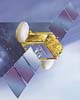 Calcutta, India (SPX) Dec 28, 2005
The successful launch Thursday of India's heaviest satellite from spaceport of Kourou in French Guyana may have boosted the country's space research efforts to yet another level, but it has also lifted the spirits of at least three Direct-To-Home televisions broadcasters, one of which has been waiting for years to launch its services in India. |
|
|

|
|
|
|
|
|
|
|
|
|
|
|
| The content herein, unless otherwise known to be public domain, are Copyright 1995-2006 - SpaceDaily.AFP and UPI Wire Stories are copyright Agence France-Presse and United Press International. ESA PortalReports are copyright European Space Agency. All NASA sourced material is public domain. Additionalcopyrights may apply in whole or part to other bona fide parties. Advertising does not imply endorsement,agreement or approval of any opinions, statements or information provided by SpaceDaily on any Web page published or hosted by SpaceDaily. Privacy Statement |

