
 |
 |
 |
 |
 |
 |
 |
 |
 |

 |
Rocky Water Source
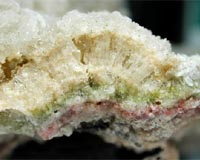
Rotterdam, Netherlands (SPX) Jun 13, 2008 Gypsum, a rocky mineral is abundant in desert regions where fresh water is usually in very short supply but oil and gas fields are common. Writing in International Journal of Global Environmental Issues, Peter van der Gaag of the Holland Innovation Team, in Rotterdam, The Netherlands, has hit on the idea of using the untapped energy from oil and gas flare-off to release the water locked in gypsum. Fresh water resources are scarce and will be more so with the effects of global climate change. Finding alternative sources of water is an increasingly pressing issue for policy makers the world over. Gypsum, explains van der Gaag could be one such resource. He has discussed the technology with people in the Sahara who agree that the idea could help combat water shortages, improve irrigation, and even make some deserts fertile. Chemically speaking, gypsum is calcium sulfate dihydrate, and has the chemical formula CaSO4.2H2O. In other words, for every unit of calcium sulfate in the mineral there are two water molecules, which means gypsum is 20% water by weight. van der Gaag suggests that a large-scale, or macro, engineering project could be used to tap off this water from the vast deposits of gypsum found in desert regions, amounting to billions of cubic meters and representing trillions of liters of clean, drinking water. The process would require energy, but this could be supplied using the energy from oil and gas fields that is usually wasted through flaring. Indeed, van der Gaag explains that it takes only moderate heating, compared with many chemical reactions, to temperatures of around 100 Celsius to liberate water from gypsum and turn the mineral residue into bassanite, the anhydrous form. "Such temperatures can be reached by small-scale solar power, or alternatively, the heat from flaring oil wells can be used," he says. He adds that, "Dehydration under certain circumstances starts at 60 Celsius, goes faster at 85 Celsius, and faster still at 100 degrees. So in deserts - where there is abundant sunlight - it is very easy to do." van der Gaag points out that the dehydration of gypsum results in a material of much lower volume than the original mineral, so the very process of releasing water from the rock will cause local subsidence, which will then create a readymade reservoir for the water. Tests of the process itself have proved successful and the Holland Innovation Team is planning a pilot study in a desert location. "The macro-engineering concept of dewatering gypsum deposits could solve the water shortage problem in many dry areas in the future, for drinking purposes as well as for drip irrigation," concludes van der Gaag. Community Email This Article Comment On This Article Share This Article With Planet Earth
Related Links Inderscience Publishers Water News - Science, Technology and Politics
 Chemical spill threatens drinking water for Chinese city: report
 Beijing (AFP) June 9, 2008
A poisonous chemical spill was Monday threatening drinking water supplies for more than 200,000 people in a city in southwest China, state media reported. |
|
|

| The content herein, unless otherwise known to be public domain, are Copyright 1995-2007 - SpaceDaily.AFP and UPI Wire Stories are copyright Agence France-Presse and United Press International. ESA Portal Reports are copyright European Space Agency. All NASA sourced material is public domain. Additional copyrights may apply in whole or part to other bona fide parties. Advertising does not imply endorsement,agreement or approval of any opinions, statements or information provided by SpaceDaily on any Web page published or hosted by SpaceDaily. Privacy Statement |
 del.icio.us
 Digg
Digg Reddit
 YahooMyWeb
 Google
 Facebook