|
 |
 |
 |
 |
 |
 |
 |
 |

 |
Rockwell Collins Introduces Next Gen Of Weather Radar
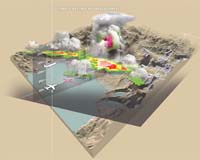
Cedar Rapids IO (SPX) Jun 28, 2006 Rockwell Collins has announced its next generation of weather radar, the MultiScan Hazard Detection system, which will enable airlines safer, smoother and more efficient flights. "We're introducing new features that offer an innovative approach to detecting, assessing and displaying weather hazards," said Kelly Ortberg, vice president and general manager, Air Transport Systems for Rockwell Collins. "This next generation system has created a whole new category of weather detection and analysis capabilities, and is the result of an ongoing passion to advance MultiScan through continuous field research and listening to the desires of the pilot community." The system includes five ground-breaking technologies that go beyond today's most advanced radar systems by adding predictive weather analysis and hazard detection features. These technologies include: Directed Sequential Hazard Assessment, Flight Path Hazard Analysis, Storm Top Information, Predictive Overflight Protection and Enhanced Turbulence Detection. At the foundation of the system's new capabilities is Directed Sequential Hazard Assessment, which offers a more comprehensive way of presenting meteorological information. This patented technology allows MultiScan to detect weather hazards and then, using a combination of horizontal and vertical scans, performs a threat analysis tailored to the phase of flight. It allows the system to change radar parameters such as frequency, wave length and pulse width to thoroughly evaluate the specific weather and determine its threat potential, transforming MultiScan into a threat detector instead of being a rain gauge. The end result is the ability to provide flight crews information on storm height, growth rate and turbulent potential all referenced to the aircraft flight plan. Flight Path Hazard Analysis takes the information provided by the Directed Sequential Hazard Assessment feature and combines it with flight path information to evaluate and display the actual weather threat along the aircraft's flight path tailored to the phase of flight. Each phase of flight uses radar techniques best adapted for the weather detection and evaluation in that region in order to display the actual threat. Rockwell Collins MultiScan algorithms provide a method for estimating the top of a weather system. This Storm Top Information can be displayed on the navigation display and when combined with the typical plan form radar display, allows flight crews to determine the best possible weather avoidance maneuver by giving them all the critical information required to determine the best route of flight. MultiScan's Predictive Overflight Protection further enhances hazard detection capabilities by measuring the storm growth rate and then makes a prediction on whether the storm or the clear air turbulence bubble above a developing storm cell will reach the aircraft's flight level. The radar will then display the predicted area of turbulence on the radar display to alert the flight crew of the potential hazard. In addition to detecting and assessing storm systems, the Enhanced Turbulence (E-Turb) feature of Rockwell Collins MultiScan Hazard Detection system, detects light to moderate turbulence events and provides flight crew warnings up to 40 NM ahead of the aircraft. Speckled magenta areas on the radar screen will indicate light to mild turbulence and solid magenta areas identify regions of moderate or greater turbulence. E-Turb functionality was made possible through a 2004 contract with NASA that Rockwell Collins won to bring E-Turb to the market. The new system builds on the success of our MultiScan Radar, which entered into service in 2002, and broke new ground as the first commercially available, automatic weather radar. Other core capabilities in the MultiScan Radar system, which will remain in the Hazard Detection System, include: 320 nautical mile weather detection and display capabilities, ground clutter suppression and geographical weather correlation. The system is in use with more than 80 customers, and is software upgradeable to the new MultiScan Hazard Detection system. Community Email This Article Comment On This Article Related Links Rockwell Collins Weather News at TerraDaily.com
 Weather Modification Takes Another Step
 Jupiter FL (UPI) Jun 25, 2006
A Florida man's theory of weakening a hurricane through the introduction of absorbent powder illustrates a new trend in science, weather modification. While China currently seeds clouds for rain and Canadian companies attempt to limit incoming hailstorms, this newest weather modification theory created by Peter Cordani focuses on virtually eliminating the destructive force of a hurricane, the Chicago Tribune reports. |
|
|

| The content herein, unless otherwise known to be public domain, are Copyright 1995-2006 - SpaceDaily.AFP and UPI Wire Stories are copyright Agence France-Presse and United Press International. ESA PortalReports are copyright European Space Agency. All NASA sourced material is public domain. Additionalcopyrights may apply in whole or part to other bona fide parties. Advertising does not imply endorsement,agreement or approval of any opinions, statements or information provided by SpaceDaily on any Web page published or hosted by SpaceDaily. Privacy Statement |