
 |
 |
 |
 |
 |
 |
 |
 |
 |

 |
Rocketing or Flying To Orbit
Huntsville - November 7, 1998 - Marshall Space Flight Center has successfully completed two years of testing radical, new rocket engines that could change the future of space travel with the development rocket engines that "breathe" oxygen from the air. "Air-breathing rocket engine technologies have the potential of opening the space frontier to ordinary folks," said Uwe Hueter of NASA's Marshall Space Flight Center in Huntsville, Ala. "We've proven the technologies on the ground with extensive testing of complex and technically challenging system components. Now, I believe we're ready to demonstrate the technologies in flight." Air-breathing rocket engines could make future space travel like today's air travel, said Hueter, manager of NASA's Advanced Reusable Technologies project. The spacecraft would be completely reusable, take off and land at airport runways, and be ready to fly again within days. An air-breathing rocket engine inhales oxygen from the air for about half the flight, so it doesn't have to store the gas onboard. So at take-off, an air-breathing rocket weighs much less than a conventional rocket, which carries all of its fuel and oxygen onboard. Getting off the ground is the most expensive part of any mission to low-Earth orbit, and reducing a vehicle's weight decreases cost significantly. An air-breathing engine (called a rocket-based, combined cycle engine) gets its initial take-off power from specially designed rockets, called air-augmented rockets, that boost performance about 15 percent over conventional rockets. When the vehicle's velocity reaches twice the speed of sound, the rockets are turned off and the engine relies totally on oxygen in the atmosphere to burn the hydrogen fuel. Once the vehicle's speed increases to about 10 times the speed of sound, the engine converts to a conventional rocket-powered system to propel the vehicle into orbit. This unconventional approach to getting to space is one of the technologies NASA's Advanced Space Transportation Program at the Marshall Center is developing to make space transportation affordable for everyone from business travelers to tourists. NASA's goal is to reduce launch costs from today's price tag of $10,000 per pound to only hundreds of dollars per pound. GASL, a small aerospace company in Ronkonkoma, N.Y., has conducted most of the air-breathing rocket engine testing at its facilities on Long Island. GASL's unique facility is capable of testing across a wide range of speeds and modes the rocket engine must achieve in flight. NASA's industry partners in developing air-breathing rocket technologies are: Aerojet Corp. of Sacramento, Calif.; Rocketdyne of Canoga Park, Calif.; Astrox Corp. of Rockville, Md.; Pennsylvania State University of University Park; and the University of Alabama in Huntsville.
RLV Reports Spacer.Com
Kistler Rotary X-3X Other Space Planes General Industry Email This Article Comment On This Article Related Links Space
 Satellite Launch To Boost DTH In India
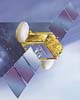 Calcutta, India (SPX) Dec 28, 2005
The successful launch Thursday of India's heaviest satellite from spaceport of Kourou in French Guyana may have boosted the country's space research efforts to yet another level, but it has also lifted the spirits of at least three Direct-To-Home televisions broadcasters, one of which has been waiting for years to launch its services in India. |
|
|

|
|
|
|
|
|
|
|
|
|
|
|
| The content herein, unless otherwise known to be public domain, are Copyright 1995-2006 - SpaceDaily.AFP and UPI Wire Stories are copyright Agence France-Presse and United Press International. ESA PortalReports are copyright European Space Agency. All NASA sourced material is public domain. Additionalcopyrights may apply in whole or part to other bona fide parties. Advertising does not imply endorsement,agreement or approval of any opinions, statements or information provided by SpaceDaily on any Web page published or hosted by SpaceDaily. Privacy Statement |

