
 |
 |
 |
 |
 |
 |
 |
 |
 |

 |
Rocket Engines Get Electric
Redondo Beach - April 10, 1999 - A TRW-built high-powered electric propulsion system is demonstrating its capabilities onboard an orbiting Air Force satellite. The Electric Propulsion Space Experiment (ESEX) is a 30-kilowatt ammonia-fueled arcjet system, the highest power electric propulsion system flown in space to date. It is one of nine experiments on the Air Force Space and Missile System Center's Advanced Research and Global Observation Satellite (ARGOS), which was launched on February 23 from Vandenberg Air Force Base. "We are delighted with the performance to date of the ESEX system," said Mary Kriebel, manager, electric propulsion programs, TRW Space & Electronics Group. "ESEX is operating very well, providing the Air Force a very stable platform from which to demonstrate the compatibility of this advanced high-powered arcjet technology with an operational spacecraft." ESEX is also demonstrating that the scalability of electric propulsion systems, which enable a variety of space missions, is limited only by the amount of power available on the spacecraft. "With the increasing power capabilities of advanced solar arrays, systems must keep pace with the challenge of processing large amounts of power without affecting onboard electronics and operations," said Kriebel. "The success of ESEX shows those challenges are achievable." The arcjet has been fired four times as of mid-March for a total of more than 20 minutes, and by the completion of the ESEX experiment, will have fired for more that 150 minutes. Since ARGOS' launch, a team of researchers has been processing the data collected by the system and from ground observations to verify the performance of the arcjet and quantify any impacts the operating arcjet may have on the spacecraft. The system has been performing nominally to date and has exhibited no interference with the ARGOS' operations. Arcjet research technology has been under development at the Air Force Research Lab's Edwards facilities since the early 1980s. TRW designed, developed, built and flight-qualified the high-powered electric propulsion system under a contract awarded by the Lab's Propulsion Directorate in 1990. TRW served as the prime contractor on the ESEX project and was responsible for all of the system engineering and flight qualification testing. Subcontract team members include Primex Aerospace Company and Orbital Sciences Corp.
Argos as SpaceDaily
Email This Article Comment On This Article Related Links Space
 Satellite Launch To Boost DTH In India
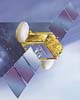 Calcutta, India (SPX) Dec 28, 2005
The successful launch Thursday of India's heaviest satellite from spaceport of Kourou in French Guyana may have boosted the country's space research efforts to yet another level, but it has also lifted the spirits of at least three Direct-To-Home televisions broadcasters, one of which has been waiting for years to launch its services in India. |
|
|

|
|
|
|
|
|
|
|
|
|
|
|
| The content herein, unless otherwise known to be public domain, are Copyright 1995-2006 - SpaceDaily.AFP and UPI Wire Stories are copyright Agence France-Presse and United Press International. ESA PortalReports are copyright European Space Agency. All NASA sourced material is public domain. Additionalcopyrights may apply in whole or part to other bona fide parties. Advertising does not imply endorsement,agreement or approval of any opinions, statements or information provided by SpaceDaily on any Web page published or hosted by SpaceDaily. Privacy Statement |

