|
 |
 |
 |
 |
 |
 |
 |
 |

 |
Rock Studies Help Crack Questions Of Glacier Thinning In West Antarctica
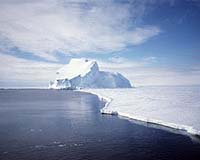
London, UK (SPX) Feb 29, 2008 Boulders the size footballs could help scientists predict the West Antarctic Ice Sheet's (WAIS) contribution to sea-level rise according to new research published this week in the journal Geology. Scientists from British Antarctic Survey (BAS), Durham University and Germany's Alfred Wegener Institute for Polar and Marine Research (AWI) collected boulders deposited by three glaciers in the Amundsen Sea Embayment - a region currently the focus of intense international scientific attention because it is changing faster than anywhere else on the WAIS and it has the potential to raise sea-level by around 1.5 metres. Analysis of the boulders has enabled the scientists to start constructing a long-term picture of glacier behaviour in the region. An urgent task is to put recent ice sheet changes into a historical context, and determine if these are part of a natural retreat since the end of the last glacial period (about 20 thousands years ago), or if they are a result of recent human-induced climate change. Lead author Dr Joanne Johnson of BAS says "Until now we didn't know much about the long-term history of this part of the West Antarctic Ice Sheet because the region is incredibly remote and inaccessible. Our geological findings add a new piece to the jigsaw and will be used for improving computer models - the most important tools we have for predicting future change." Initial results show that Pine Island Glacier has 'thinned' by around 4 centimetres per year over the past 5,000 years, while Smith and Pope Glaciers thinned by just over 2 cm per year during the past 14,500 years. These rates are more than 20 times slower than recent changes: satellite, airborne and ground based observations made since the 1990s show that Pine Island Glacier has thinned by around 1.6 metres per year in recent years. The scientists reached their conclusions by investigating how long the boulders have been exposed to cosmic radiation rather than being shielded by ice or sediment. Co-author Dr Mike Bentley from the University of Durham said "When rocks are left high and dry by thinning glaciers they are exposed to high energy cosmic rays which bombard the rock. This creates atoms of particular elements that we can extract and measure in the laboratory - the longer they have been exposed the greater the build-up of these elements. The discovery that we can place a fix on when rocks were left behind by the ice has revolutionised our understanding of how the Antarctic ice sheet has behaved in the past. " Community Email This Article Comment On This Article Related Links British Antarctic Survey Beyond the Ice Age
 Has The Mystery Of The Antarctic Ice Sheet Been Solved
 Cardiff, UK (SPX) Feb 29, 2008
A team of scientists from Cardiff University's School of Earth and Ocean Sciences and Amgueddfa Cymru - National Museum Wales travelled to Africa to find new evidence of climate change which helps explain some of the mystery surrounding the appearance of the Antarctic ice sheet. |
|
|

| The content herein, unless otherwise known to be public domain, are Copyright 1995-2007 - SpaceDaily.AFP and UPI Wire Stories are copyright Agence France-Presse and United Press International. ESA Portal Reports are copyright European Space Agency. All NASA sourced material is public domain. Additional copyrights may apply in whole or part to other bona fide parties. Advertising does not imply endorsement,agreement or approval of any opinions, statements or information provided by SpaceDaily on any Web page published or hosted by SpaceDaily. Privacy Statement |