|
 |
 |
 |
 |
 |
 |
 |
 |

 |
Rising Tides Intensify Non-Volcanic Tremor In Earth's Crust
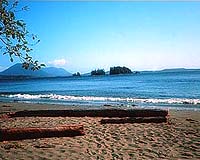
Tacoma WA (SPX) Nov 26, 2007 For more than a decade geoscientists have detected what amount to ultra-slow-motion earthquakes under Western Washington and British Columbia on a regular basis, about every 14 months. Such episodic tremor-and-slip events typically last two to three weeks and can release as much energy as a large earthquake, though they are not felt and cause no damage. Now University of Washington researchers have found evidence that these slow-slip events are actually affected by the rise and fall of ocean tides. "There has been some previous evidence of the tidal effect, but the detail is not as great as what we have found," said Justin Rubinstein, a UW postdoctoral researcher in Earth and space sciences. And while previous research turned up suggestions of a tidal pulse at 12.4 hours, this is the first time that a second pulse, somewhat more difficult to identify, emerged in the evidence at intervals of 24 to 25 hours, he said. Rubinstein is lead author of a paper that provides details of the findings, published Nov. 22 in Science Express, the online edition of the journal Science. Co-authors are Mario La Rocca of the Istituto Nazionale di Geofisica e Vulcanologia in Italy, and John Vidale, Kenneth Creager and Aaron Wech of the UW. The most recent tremor-and-slip events in Washington and British Columbia took place in July 2004, September 2005 and January 2007. Before each, researchers deployed seismic arrays, each containing five to 11 separate seismic monitoring stations, to collect more accurate information about the location and nature of the tremors. Four of the arrays were placed on the Olympic Peninsula in Washington and the fifth was on Vancouver Island in British Columbia. The arrays recorded clear twice-a-day pulsing in the 2004 and 2007 episodes, and similar pulsing occurred in 2005 but was not as clearly identified. The likely source from tidal stresses, the researchers said, would be roughly once- and twice-a-day pulses from the gravitational influence of the sun and moon. The clearest tidal pulse at 12.4 hours coincided with a peak in lunar forcing, while the pulse at 24 to 25 hours was linked to peaks in both lunar and solar influences. The rising tide appeared to increase the tremor by a factor of 30 percent, though the Earth distortion still was so small that it was undetectable without instruments, said Vidale, a UW professor of Earth and space sciences and director of the Pacific Northwest Seismograph Network. "We expected that the added water of a rising tide would clamp down on the tremor, but it seems to have had the opposite effect. It's fair to say that we don't understand it," Vidale said. "Earthquakes don't behave this way," he added. "Most don't care whether the tide is high or low." The researchers were careful to rule out noise that might have come from human activity. For instance, one of the arrays was near a logging camp and another was near a mine. "It's pretty impressive how strong a signal those activities can create," Rubinstein said, adding that the slow-slip pulses were recorded when those human activities were at a minimum. Community Email This Article Comment On This Article Related Links University of Washington Tectonic Science and News
 Measurements Link Magma Melting Rate To Tectonic Plate Subduction Rate
 Champaign IL (SPX) Nov 09, 2007
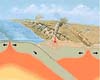
Determining the origin and rate of magma production in subduction zone volcanoes is essential to understanding the formation of continental crust and the recycling of subducted materials back into Earth's mantle. Now, geologists at the University of Illinois report new measurements of rock samples from Kick'em Jenny, a submarine volcano in the Caribbean, that link the rate at which magma is produced beneath subduction zone volcanoes to the rate at which tectonic plates converge in this plate tectonic setting. |
|
|

| The content herein, unless otherwise known to be public domain, are Copyright 1995-2007 - SpaceDaily.AFP and UPI Wire Stories are copyright Agence France-Presse and United Press International. ESA Portal Reports are copyright European Space Agency. All NASA sourced material is public domain. Additional copyrights may apply in whole or part to other bona fide parties. Advertising does not imply endorsement,agreement or approval of any opinions, statements or information provided by SpaceDaily on any Web page published or hosted by SpaceDaily. Privacy Statement |