|
 |
 |
 |
 |
 |
 |
 |
 |

 |
Rings Around The Planets: Recycling Of Material May Extend Ring Lifetimes
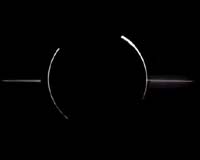
Boulder - Dec 09, 2003 Although rings around planets like Jupiter, Saturn, Uranus and Neptune are relatively short-lived, new evidence implies that the recycling of orbiting debris can lengthen the lifetime of such rings, according to University of Colorado researchers. Strong evidence now implies small moons near the giant planets like Saturn and Jupiter are essentially piles of rubble, said Larry Esposito, a professor at CU-Boulder's Laboratory for Atmospheric and Space Physics. These re-constituted small bodies are the source of material for planetary rings. Previous calculations by Esposito and LASP Research Associate Joshua Colwell showed the short lifetimes for such moons imply that the solar system is nearly at the end of the age of rings. "These philosophically unappealing results may not truly describe our solar system and the rings that may surround giant extra-solar planets," said Esposito. "Our new calculations of models explain how inclusion of recycling can lengthen the lifetime of rings and moons." The observations from the Voyager and Galileo space missions showed a variety of rings surrounding each of the giant planets, including Jupiter, Saturn, Uranus and Neptune. The rings are mixed in each case with small moons. "It is clear that the small moons not only sculpt the rings through their gravity, but are also the parents of the ring material," said Esposito. "In each ring system, destructive processes like grinding, darkening and spreading are acting so rapidly that the rings must be much younger than the planets they circle." Numerical models by Esposito and Colwell from the 1990's showed a "collisional cascade," where a planet's moons are broken into smaller moons when struck by asteroids or comets. The fragments then are shattered to form the particles in new rings. The rings themselves are subsequently ground to dust, which is swept away. But according to Colwell, "Some of the fragments that make up the rings may be re-accreted instead of being ground to dust. New evidence shows some debris has accumulated into moons or moonlets rather than disappearing through collisional erosion." "This process has proceeded rapidly," said Esposito. "The typical ring is younger than a few hundred million years, the blink of an eye compared to the planets, which are 4.5 billion years old. The question naturally arises why rings still exist, to be photographed in such glory by visiting human spacecraft that have arrived lately on the scene," he said. "The answer now likely seems to be cosmic recycling," said Esposito. Each time a moon is destroyed by a cosmic impact, much of the material released is captured by other nearby moons. These recycled moons are essentially collections of rubble, but by recycling material through a series of small moons, the lifetime of the ring system may be longer than we initially thought." Esposito and former LASP Research Associate Robin Canup, now with the Southwest Research Institute's Boulder branch, showed through computer modeling that smaller fragments can be recaptured by other moons in the system. "Without this recycling, the rings and moons are soon gone," said Esposito. But with more recycling, the lifetime is longer, Esposito said. With most of the material recycled, as now appears to be the case in most rings, the lifetime is extended by a large factor. "Although the individual rings and moons we now see are ephemeral, the phenomenon persists for billions of years around Saturn," said Esposito. "Previous calculations ignored the collective effects of the other moons in extending the persistence of rings by recapturing and recycling ring material." Esposito, the principal investigator on a $12 million spectrograph on the Cassini spacecraft slated to arrive at Saturn in July 2004, will look closely at the competing processes of destruction and re-capture in Saturn's F ring to confirm and quantify this explanation. Esposito discovered the F Ring using data from NASA's Voyager 2 mission to the outer planets launched in 1978. Community Email This Article Comment On This Article Related Links Laboratory for Atmospheric and Space Physics SpaceDaily Search SpaceDaily Subscribe To SpaceDaily Express Life Beyond Earth Lands Beyond Beyond - extra solar planets - news and science
 Latching Onto Lichen
 Moffett Field CA (SPX) Dec 06, 2005
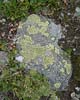
Bacteria can often survive the harsh conditions of space, and their toughness and adaptability have made them key candidates for the transfer of life between planets. But in a recent study by European scientists, lichen survived a trip in space even better than bacteria do. |
|
|

| The content herein, unless otherwise known to be public domain, are Copyright 1995-2006 - SpaceDaily.AFP and UPI Wire Stories are copyright Agence France-Presse and United Press International. ESA PortalReports are copyright European Space Agency. All NASA sourced material is public domain. Additionalcopyrights may apply in whole or part to other bona fide parties. Advertising does not imply endorsement,agreement or approval of any opinions, statements or information provided by SpaceDaily on any Web page published or hosted by SpaceDaily. Privacy Statement |