
 |
 |
 |
 |
 |
 |
 |
 |
 |

 |
Researchers Turning Freshwater Farm Ponds Into Crab Farms
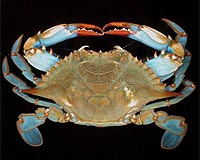
Raleigh NC (SPX) Oct 22, 2008 Work by researchers at North Carolina State University is leading to a new kind of crab harvest - blue crabs grown and harvested from freshwater ponds, instead of from the sea. Crab lovers shouldn't worry, researchers say, because the pond-raised crabs look and taste just like their ocean-raised brethren. North Carolina's native blue crab population has been at historic lows since 2000. Dr. Dave Eggleston, director of NC State's Center for Marine Sciences and Technology (CMAST) and professor of marine, earth and atmospheric sciences, looked at various methods for helping the population recover. He hit upon a solution which not only reduces pressure on existing crab populations, but also benefits farmers looking to diversify their crops: using irrigation ponds on farms to grow blue crabs. "We started out by catching small crabs in the wild and stocking them into farm ponds loaded with bass and bluegill predators, and were still able to get 12 percent survival," Eggleston says. "So we teamed with the University of Maryland's Center of Marine Biotechnology who had the expertise to growth hatchery-reared blue crabs, and stocked these blue crabs in freshwater experimental aquaculture ponds at NC State's Vernon James Research and Extension Center in Plymouth, N.C., where the crabs exhibited some of the highest growth rates on record." Eggleston then noticed that a lot of farmers in Eastern N.C. were trying to diversify their crop offerings in response to the decline in tobacco demand. "A lot of these farms have irrigation ponds, and we thought if crabs can live in fresh water, this would take some pressure off the coastal crab population and give farmers another crop, by letting their ponds work for them," he says. Eggleston and his fellow researchers discovered that crabs can tolerate a salinity level of only .3 parts per thousand, which is about the same level found in coastal tap water. They did further work to determine the best set of circumstances for raising crab: population density, food rations, and habitat structure in ponds. This past July, Eggleston and Ray Harris, NC State director of cooperative extension for Carteret County, had the opportunity for a large-scale test when they stocked a 10-acre lake with 40,000 hatchery-raised crabs, and a smaller pond with 4,000 crabs. The crabs will take approximately 105 days to reach maturity, and so far the endeavor looks successful. With the rapid rate of growth for pond-raised crabs, Eggleston expects that in a given year, a farm could produce two to three harvests, as crabs don't do well in freshwater during the winter months. "If you look at a 2 1/2 -acre pond, you could stock it with 50,000 hatchery-raised crabs and expect to harvest around 20 percent, or 10,000 fully grown crabs. At $3 per crab, that's $30,000 - and multiply that times three. It definitely adds up." Funding for this research was provided by the N.C. Blue Crab Research Program that was established by the N.C. General Assembly and is administered by North Carolina Sea Grant. Community Email This Article Comment On This Article Share This Article With Planet Earth
Related Links North Carolina State University Farming Today - Suppliers and Technology
 Syrian grain output strangled by drought
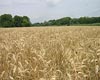 Damas (AFP) Oct 21, 2008
Syria's worst drought in 40 years is strangling grain production, prompting authorities to seek aid from the UN's Food and Agricultural Organisation, the official SANA news agency reported on Tuesday. |
|
|

| The content herein, unless otherwise known to be public domain, are Copyright 1995-2007 - SpaceDaily.AFP and UPI Wire Stories are copyright Agence France-Presse and United Press International. ESA Portal Reports are copyright European Space Agency. All NASA sourced material is public domain. Additional copyrights may apply in whole or part to other bona fide parties. Advertising does not imply endorsement,agreement or approval of any opinions, statements or information provided by SpaceDaily on any Web page published or hosted by SpaceDaily. Privacy Statement |
 del.icio.us
 Digg
Digg Reddit
 YahooMyWeb
 Google
 Facebook