|
 |
 |
 |
 |
 |
 |
 |
 |

 |
Researchers Try To Make Nanomaterial Industry Environmentally Sustainable
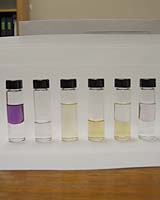
Atlanta GA (SPX) Mar 17, 2005 Research into making the emerging nanomaterial industry environmentally sustainable is showing promise in a preliminary engineering study conducted at the Georgia Institute of Technology and Rice University. Under the auspices of the Rice University Center for Biological and Environmental Nanotechnology (CBEN) funded by the National Science Foundation (NSF), researchers have been investigating the potential environmental impact of nanomaterial waste. Specifically, they want to know if they can predict the fate and transport of nanomaterial waste in natural systems, and whether nanomaterials will behave the same as common environmental pollutants. In addition, they want to determine if nanomaterials can be treated before they enter the environment to minimize impact. Previous research provided information on how structures such as fullerenes clump together in water to form larger particles. This study is the first to show what factors affect the size of these aggregate particles. Researchers picked fullerenes, molecules composed of 60 carbon atoms, as their model carbon-based nanomaterial. Fullerenes have a potentially broad range of applications, including their use in pharmaceuticals, as lubricants, as semiconductors and in energy conversion. Mass commercial production of fullerenes may get under way internationally in just two years. "This research is providing the information to make practices sustainable when fullerene production comes on line," said John Fortner, a Georgia Tech research scientist and Rice University Ph.D. student. "It's our goal to minimize environmental impact in contrast to the pollution caused in the past by, for example, dry cleaning industry practices. "It is a new thing to have research funding to look at a material's potential as a pollutant, how to minimize it's environmental impact and make the industry sustainable," Fortner added. "It's really the right thing to do. You know, 'An ounce of prevention is worth a pound of cure.'" Fortner will present findings of the research team March 16 at the American Chemical Society's 229th national meeting in San Diego, Calif. The team includes Joe Hughes, chair of the Georgia Tech School of Civil and Environmental Engineering and a former Rice University professor. Though much is known about fullerenes, little is known about their fate when released into the environment because they have not been produced on an industrial scale. For now, the U.S. Occupational Safety and Health Administration (OSHA) calls for handling fullerenes in the same way as carbon black, which is similar to graphite and very different in properties from fullerenes � in particular the C60 "buckyball" carbon molecules that Fortner and his colleagues are studying. "Fullerenes are virtually insoluble in water, yet most biological and environmental systems are based around water," Fortner noted. "Researchers thought fullerenes couldn't be transported by water because they are so hydrophobic. We thought they would simply stick to soil or other organic material. "But research shows this is actually not the case. When fullerenes, such as C60, come in contact with water, they form aggregates at the nanoscale. We call it nano-C60." In their study, Fortner and his colleagues devised several novel applications of imaging techniques to characterize the physical and chemical formation of nano-C60 particles in water mixed with the organic solvent THF. Using cryoTEM (transmission electron microscopy), researchers froze samples of the solution and examined slices of them to determine the effects of various parameters on particle size. The nano-C60 particles that formed were 20 to 500 nanometers across and retained the same properties as C60 molecules � a determination researchers made using nuclear magnetic resonance imaging. This finding is significant because pure C60 is recoverable, therefore enhancing the promise of sustainable fullerene production practices, Fortner noted. Also, electron and powder diffraction techniques revealed that nano-C60 has a particular crystalline structure. These findings reinforced previous research done elsewhere. "Our work builds on previous findings in an environmental engineering context," Fortner explained. "We wanted to know about nano-C60 formation under a variety of ambient natural conditions." Researchers found that changing the pH of the water with which C60 is mixed affected particle size. A higher pH, such as 9, yielded smaller particles, and a lower pH, such as 5, yielded larger particles. Also, the rate at which C60 is mixed with water affected particle size. A slower rate resulted in larger particles, and a faster rate produced smaller ones. "This research is the first to show control over the particle formation processes based on these parameters," Fortner said. Researchers also examined the stability of these particles as a function of ion concentration in the water. Because nano-C60 particles rely on a negatively charged surface to remain suspended in water, the presence of elevated concentrations of ions, such as dissolved NaCl (table salt), can render the surface neutral. If that happens, nano-C60 particles sink to the bottom of the solution container and form a solid glob, Fortner explained. "In the laboratory, scientists typically use de-ionized water, but that's not the case in nature," Fortner said. "At some level, salt is present, even in groundwater. We found that even in water with the normal salt concentration of groundwater, nano-C60 particles still remain suspended for months. However, in simulated sea water, the particles are neutralized and sink in a matter of hours." Researchers don't yet know the full implications of this finding, Fortner added. "We've just developed a conceptual model so far, and it doesn't take into account all of the unknowns or heterogeneity found in the environment," Fortner said. "We studied the most controlled situations and got preliminary data." Community Email This Article Comment On This Article Related Links SpaceDaily Search SpaceDaily Subscribe To SpaceDaily Express Nano Technology News From SpaceMart.com Computer Chip Architecture, Technology and Manufacture
 Prof Develops Cancer Nanobomb
 Newark DE (SPX) Oct 14, 2005
University of Delaware researchers are opening a new front in the war on cancer, bringing to bear new nanotechnologies for cancer detection and treatment and introducing a unique nanobomb that can literally blow up breast cancer tumors. |
|
|

| The content herein, unless otherwise known to be public domain, are Copyright 1995-2006 - SpaceDaily.AFP and UPI Wire Stories are copyright Agence France-Presse and United Press International. ESA PortalReports are copyright European Space Agency. All NASA sourced material is public domain. Additionalcopyrights may apply in whole or part to other bona fide parties. Advertising does not imply endorsement,agreement or approval of any opinions, statements or information provided by SpaceDaily on any Web page published or hosted by SpaceDaily. Privacy Statement |