|
 |
 |
 |
 |
 |
 |
 |
 |

 |
Researchers To Help Smart Radios Form Cognitive Network
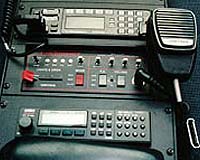
Blacksburg VA (SPX) Sep 20, 2005 Cognitive radios present an exciting new frontier for the world of wireless telecommunications. Now Virginia Tech's Center for Wireless Telecommunications (CWT) has received a three-year National Science Foundation (NSF) grant to extend its work in the field of cognitive radio to advance cognitive network capability. Cognitive radios are like intelligent cell phones or police radios that can determine the best way to operate in any given situation. Instead of blindly following a set of predefined protocols, like regular radios, cognitive radios can now configure to their environment and their user's needs. CWT's approach is that, "The new cognitive radios are similar to living creatures in that they are aware of their surroundings and understand their own and their user's capabilities and the governing social constraints," said Center director Charles W. Bostian, Alumni Distinguished Professor of Electrical and Computer Engineering. A radio's actions arise from a rational process that predicts probable consequences and remembers all of its failures and successes. "The radios are treated like animals that learn to evolve over time with their changing environment," said electrical engineering Ph.D. candidate Tom Rondeau. "Basically, the cognitive engine is a brain that reads the radio's 'meters' and turns the radio's 'knobs' in order to get the desired outcome." The grant will fund research that will for the first time allow the radios to share a distributed knowledge base to use for individual and collective reasoning and learning. "Every cognitive radio has a knowledge base it has learned over time. Now, our research makes it possible for all cognitive radios to be connected in a network where that information can be shared," said Bostian. "You will now have a whole network of radios working and sharing information in what we characterize as a cognitive network. "We approached this network like you would approach a community of animals. First, we teach the radios to seek others of their own kind and recognize their environment, thus creating a network. Then the CWT team teaches the different cognitive radios to work together." "These radios are learning to coexist and work together in an efficient community," said Ph.D candidate David Maldonado. "For example, if a businessman informs a scientist of a road block ahead, even though they have different backgrounds, the scientist is going to be able to understand this information and configure his driving plan accordingly." The CWT team will be conducting the first large scale tests of cognition in a well-defined wireless network environment. The experiments will provide quantitative answers to such very practical questions as, "Can cognitive techniques allow 'Wi-Fi like' services in locally unoccupied TV channels?" Meaning 'Wi-Fi like' services could eventually be available in once previously unusable TV spectrums. The research will have many important outcomes, said Bostian. First, a cognitive engine will be fully implemented in any wireless network, making it a cognitive one. Cognitive engines will be implemented into the widely available GNU radio, which is a low-cost software-defined radio developed specifically for experimentation in projects like this one. Finally, there will be a practical assessment of the performance advantages of cognitive wireless networks. This grant was awarded through the NSF's NetS Programmable Wireless Information Networks Program. Bostian is principal investigator. Co-Pls are Associate Professor Michael Hsiao and Assistant Professor Allen MacKenzie in the the Bradley Department of Department of Electrical and Computer Engineering, and Economics Associate Professor Sheryl Ball. Additional sponsorship is provided by Anritsu Company, which will provide much needed testing and measurement equipment. The Virginia Tech researchers will use the equipment to prototype key cognitive radio functions and measure the performance of the resulting designs. Rondeau received his B.S. degree in electrical engineering from Virginia Tech and Maldonado received his B.S. degree in electrical engineering at the University of Puerto Rico, Mayaguez. Both are fellows in the Integrated Research and Education in Advanced Networking program at Virginia Tech. Community Email This Article Comment On This Article Related Links SpaceDaily Search SpaceDaily Subscribe To SpaceDaily Express Read the latest in Military Space Communications Technology at SpaceWar.com
 Unified Quest Aims To Refine Irregular Warfare
 Fort Monroe VA (DOD) Jan 11, 2006
Unified Quest 2006 is a four-phase war game taking place now through March in which Army Chief of Staff Gen. Peter Schoomaker expects to refine proficiencies in irregular warfare. |
|
|

| The content herein, unless otherwise known to be public domain, are Copyright 1995-2006 - SpaceDaily.AFP and UPI Wire Stories are copyright Agence France-Presse and United Press International. ESA PortalReports are copyright European Space Agency. All NASA sourced material is public domain. Additionalcopyrights may apply in whole or part to other bona fide parties. Advertising does not imply endorsement,agreement or approval of any opinions, statements or information provided by SpaceDaily on any Web page published or hosted by SpaceDaily. Privacy Statement |