|
 |
 |
 |
 |
 |
 |
 |
 |

 |
Researchers Review Bio Detection Technologies
Livermore, CA (SPX) Feb 28, 2007 In an effort to detect biological threats quickly and accurately, a number of detection technologies have been developed. Researchers from Lawrence Livermore National Laboratory review several of the latest technologies in the most recent issue (Issue 3, 2007), of the British journal "The Analyst," which appears online. "It's important to provide a summary of the latest technologies and approaches for sensing systems and platforms that could lead to bioagent detectors for responders to use in the field," said LLNL's lead author Jeffrey Tok. Other authors include Nicholas Fischer and Theodore Tarasow of LLNL's BioSecurity and Nanosciences Laboratory. One technique, previously described by Tok and colleagues, involves using a barcode system, similar to the barcodes used on retail products, to detect biological agents in the field. Nanowires built from sub-micrometer layers of different metals, including gold, silver and nickel, are able to act as "barcodes" for detecting a variety of pathogens, such as anthrax, smallpox, ricin and botulinum toxin. The approach could simultaneously identify multiple pathogens via their unique fluorescent characteristics. Another detection strategy involves the development of electrical current-based readout of the nanowires for protein and virus sensing. The wires are arranged as field-effect transistors (FETs), where slight variations at the surface produce a change in conductivity. Developers of this technology predict that a high-density nanowire-circuit array geared toward pathogen detection could be built on a large scale suitable for biosecurity surveillance. Physical, chemical and optical properties that can be tuned to detect a particular bioagent are key to microbead-based immunoassay sensing systems. A unique spectral signature or fingerprint can be tied to each type of bead. Beads have been joined with antibodies to specific biowarfare agents. This method has been demonstrated in the Autonomous Pathogen Detection System (APDS), a technology developed by Lawrence Livermore researchers. APDS contains an aerosol collector to constantly "inhale" particles from its surrounding environment for analysis. Microarray-based immunoassay sensing approaches can be used to detect bacteria, such as the E. coli recently found in spinach and other fresh-packed greens. This approach can differentiate pathogens from harmless bacteria. In an analogous technique called aptamer microarray, short single strand chains of DNA (less than 100 nucleotides) are developed that bind to target molecules and fold into complex structures. The folding event results in an easy-to-read electrical charge. This binding-induced signaling strategy is particularly well suited for sensing in complex samples. In a whole-cell-based immunoassay sensing system, an engineered B lymphocyte cell in which both pathogen-sensing membrane-bound antibodies and an associated light-emitting reporting system are all expressed in vivo. The B lymphocyte cell-based sensing system, termed CANARY, centers on an easily expressed calcium-sensitive bioluminescent protein from the Aequoria victoria jellyfish. When exposed to targeted biowarfare compounds, an increase in photons was observed within the B lymphocyte cells in a matter of seconds. The photon changes can then be easily detected using an inexpensive optical system. "The ability to miniaturize and adapt traditional bench-top immunoassay protocols to a fully automated micro-or nano-fluidic chip holds tremendous promise to enable multiplex, efficient, cost-effective and accurate pathogen sensing systems for both biodefense and medical applications," Tok said. Community Email This Article Comment On This Article Related Links DOE/Lawrence Livermore National Laboratory Darwin Today At TerraDaily.com Darwin Today At TerraDaily.com
 Lost Cuckoo Breaks Its Silence
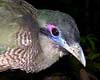 Bronx, NY (SPX) Feb 28, 2007
A team of biologists with the New York-based Wildlife Conservation Society (WCS) have recorded for the first time the call of the extremely rare Sumatran ground cuckoo, found only on the island of Sumatra in Indonesia. The bird was captured by a trapper and handed over to WCS biologists, who recorded the bird's call while it nursed an injured foot. Once fully recovered, the bird will be released back into the wild. |
|
|

| The content herein, unless otherwise known to be public domain, are Copyright 1995-2006 - SpaceDaily.AFP and UPI Wire Stories are copyright Agence France-Presse and United Press International. ESA PortalReports are copyright European Space Agency. All NASA sourced material is public domain. Additionalcopyrights may apply in whole or part to other bona fide parties. Advertising does not imply endorsement,agreement or approval of any opinions, statements or information provided by SpaceDaily on any Web page published or hosted by SpaceDaily. Privacy Statement |