|
 |
 |
 |
 |
 |
 |
 |
 |

 |
Researchers Invent Energy-Saving Computer Chip
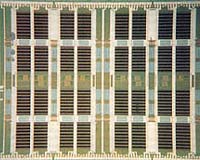
Calgary AB (SPX) Dec 09, 2004 University of Alberta researchers have designed a computer chip that uses about 100 times less energy than current state-of-the-art digital chips. The greatly reduced energy consumption of this novel technology offers promise for many small devices with relatively low power needs. This technology could one day eliminate the need to recharge cellphones, help introduce smaller, ultra-high-speed communications systems, and advance the use of implantable health care devices, such as drug delivery chips. Research and development is ongoing before this technology can be implemented in products. The team at the iCORE High-Capacity Digital Communications Laboratory, including Dr. Vincent Gaudet, Dr. Christian Schlegel, and former graduate students Dave Nguyen and Chris Winstead, created the microchip while working in the University of Alberta Department of Electrical and Computer Engineering. The communications chip was designed by Nguyen, manufactured by CMC (the Canadian Microelectronics Corporation) and tested at the University of Alberta. This new analog processing technology has been used by Winstead to build the largest analog decoder chip fabricated to date, also built at iCORE's High-Capacity Digital Communications Laboratory at the University of Alberta. The iCORE HCDC Laboratory is a recognized world leader in this novel and promising technology. "It is well known that there is a power barrier for future increases in process speeds and device sizes, and to overcome this, the world needs a new, disruptive technology," said Dr. Schlegel. "A fundamental new idea gave our team the edge, and we have been fortunate to have maintained a strong group here working on this technology for the last few years." The invention employs a new method of processing digital data, known as analog decoding, which uses extremely low levels of power to execute its detection algorithm. The team's research shows no other reported chip uses a lower amount of energy consumed per decoded information bit. The team has published two conference papers based on this project this year: one for the International Symposium on Turbo Codes in Brest, France, and another for the International Symposium on Circuits and Systems (ISCAS) in Vancouver. Community Email This Article Comment On This Article Related Links University of Alberta SpaceDaily Search SpaceDaily Subscribe To SpaceDaily Express Space Technology News - Applications and Research
 Industry Team Achieve New Communications Technology With AESA Radars
 Baltimore MD (SPX) Jan 12, 2006
A team comprised of three leading US aerospace and defense contractors has demonstrated an innovative technological use of active electronically scanned array (AESA) radars for high-bandwidth communications. |
|
|

| The content herein, unless otherwise known to be public domain, are Copyright 1995-2006 - SpaceDaily.AFP and UPI Wire Stories are copyright Agence France-Presse and United Press International. ESA PortalReports are copyright European Space Agency. All NASA sourced material is public domain. Additionalcopyrights may apply in whole or part to other bona fide parties. Advertising does not imply endorsement,agreement or approval of any opinions, statements or information provided by SpaceDaily on any Web page published or hosted by SpaceDaily. Privacy Statement |