|
 |
 |
 |
 |
 |
 |
 |
 |

 |
Researchers Develop New Ultrasensitive Assay To Detect Most Poisonous Substance Known
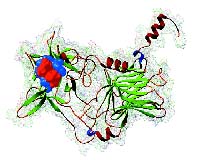
Duarte CA (SPX) May 06, 2008 Scientists at City of Hope and the California Department of Public Health have developed a new ultrasensitive assay to detect botulinum neurotoxin. The toxin is one of the most poisonous substances known that can cause life-threatening disease, and is considered a major potential bioterrorism threat agent. The research team's work is published today in the online journal PLoS ONE. Botulinum neurotoxin is produced by the bacterium Clostridium botulinum. When ingested, the toxin disables nerve function and can result in paralysis and even death. Botulism normally results when a person eats food tainted with C. botulinum bacteria or if a wound is infected by the bacterium. Infants, whose digestive systems are not yet fully developed, also are susceptible to the disease if the bacterium gains a foothold in their intestinal tract. The Centers for Disease Control and Prevention identify botulinum neurotoxin as one of six "maximum threat" bioterrorism agents due to its potency, lethality and ease of production and transport. One gram of botulinum toxin could kill more than 1 million people, according to a 2001 study in the Journal of the American Medical Association. "The new test is at least ten thousand times more sensitive and produces results much faster than the current detection method for botulinum neurotoxin," said Markus Kalkum, Ph.D., assistant professor, Division of Immunology, City of Hope, and lead researcher in the study. "Wide use of the new assay would improve food safety and food processing technology, speed up and improve the diagnosis and treatment of human disease, advance the development of novel therapeutics, and greatly enhance the country's ability to detect and defend against a bioterrorism attack." The collaborative research team developed a test that is less expensive, faster and easier to perform than current testing options. They achieved this through the use of microscopic beads and special photochemicals that glow under ultraviolet light to achieve a heightened level of sensitivity. The microscopic beads are coated with antibodies to the botulinum neurotoxin and then mixed with the liquefied sample to be tested. The antibodies latch on to any botulinum neurotoxin molecules present in the solution and are then used to convert a special chemical into a fluorescent dye that glows in the dark when illuminated with blue or ultraviolet light. The new assay works well in liquid foods such as milk and carrot juice, and in blood serum. The testing method has possible application in diagnosing other diseases. Researchers are investigating the potential use of antibodies for different diseases to expand the scope of the test. Community Email This Article Comment On This Article Related Links Public Library of Science The Long War - Doctrine and Application
 Homeland Security: The week ahead
 Washington (UPI) May 5, 2008
 Democratic primaries in Indiana and North Carolina Tuesday mean that presidential politics is likely to dominate the news agenda this week. But among all the endless talk of demographics, victory margins and delegate counts, here are a few national and homeland security events and stories that might make the inside pages. |
|
|

| The content herein, unless otherwise known to be public domain, are Copyright 1995-2007 - SpaceDaily.AFP and UPI Wire Stories are copyright Agence France-Presse and United Press International. ESA Portal Reports are copyright European Space Agency. All NASA sourced material is public domain. Additional copyrights may apply in whole or part to other bona fide parties. Advertising does not imply endorsement,agreement or approval of any opinions, statements or information provided by SpaceDaily on any Web page published or hosted by SpaceDaily. Privacy Statement |