|
 |
 |
 |
 |
 |
 |
 |
 |

 |
Researchers Create Supersized Molecule Of DNA
Stanford - Oct 31, 2003 Scientists at Stanford University have created an expanded molecule of DNA with a double helix wider than any found in nature. Besides being more heat resistant than natural DNA, the new version glows in the dark - a property that could prove useful in detecting genetic defects in humans. A description of the molecule, dubbed "xDNA," is published in the Oct. 31 issue of the journal Science. "We've designed a genetic system that's completely new and unlike any living system on Earth," said Eric T. Kool, a professor of chemistry at Stanford and co-author of the Science study. "Unlike natural DNA, our expanded molecule is fluorescent and is considerably more stable when subjected to higher temperatures."
Natural bases Only four bases exist in nature: adenine (A), thymine (T), guanine (G) and cytosine (C). Because of their unique size and shape, T always pairs with A, and G with C. Any other combination (such as A-C or G-T) would be too wide or too narrow to fit inside the double helix. Human DNA consists of about three billion A-T and G-C base pairs arranged in a specific sequence that spells out all of the genetic instructions needed to build a healthy person. However, if just one or two base pairs end up in the wrong order, the genetic code could go haywire and result in a potentially devastating birth defect or a chronic disease, such as cancer or sickle cell anemia. "The bases are where the real action occurs," Kool noted. "What we've done in our experiment is to actually change them."
xDNA The Stanford group used a similar technique to create xT - a synthetic base that's twice as big as natural T. The next challenge was to make these oversized bases fit snugly inside a double helix. "We started from scratch," Kool recalled. "We spent years, in fact, making these stretched molecules, and then years trying to see if they would form a helix." Success finally came when they paired an expanded A with a normal T (xA-T) and an expanded T with a normal A (xT-A). Using this arrangement, the researchers were able to synthesize a double helix that could stretch just enough to hold the expanded base pairs intact. The result was a stable new form of DNA that's about 20 percent wider than natural DNA. The researchers named the new molecule "expanded DNA," or xDNA. "Previously, scientists have worked on making new base pairs for the natural DNA helix," Kool explained. "What we've done is come up with a whole new helix instead." The lab's next goal is to create expanded versions of the other two bases, G and C, he added.
Size matters "Almost everything bigger stacks better than things that are smaller, and base pairs are no exception," Kool said. "They'd rather be stacked on one another, and that keeps the helix together and thus more stable. With DNA, size matters." Bigger molecules also tend to be fluorescent, he added, which probably explains why - unlike natural DNA - xDNA emits a violet light that's easy to see under a microscope. "It's possible that every base pair in xDNA is fluorescent," Kool said. "That means each base pair could change color or intensity when it finds a complementary strand of natural DNA or RNA." This fluorescent property could prove useful for medical biopsies, he said, adding: "You need fast and accurate ways of genetically typing cells, and I think color is an interesting way of doing that. You'd put a thin slice of tissue on a slide, stain it with your molecule, look at it under a microscope and say, 'Ah! This tumor has this mutation in its DNA, so now we know what drugs to use to treat it."
Alien life "This new DNA couldn't function in the natural system on Earth," he cautioned. "It's too big. However, we like to think that one day it could be the genetic material for a new form of life, maybe here or on another planet. So when we send explorer robots to Jupiter's moon, Europa, and look under the ice, we'll have an idea about what sort of life we should be looking for." The Science study was co-written by Stanford graduate students Haibo Liu (lead author), Jianmin Gao and Lystranne Maynard; former graduate student David Saito; and Stephen R. Lynch, a science and engineering associate in the Department of Chemistry. The work was supported by the National Institutes of Health and by Stanford Graduate Fellowships. CommunityEmail This Article Comment On This Article Related Links Kool Lab at Stanford SpaceDaily Search SpaceDaily Subscribe To SpaceDaily Express Life Beyond Earth Lands Beyond Beyond - extra solar planets - news and science
 SETI Sets Its Sights On M Dwarfs
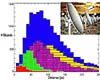 Moffett Field CA (SPX) Nov 18, 2005
Scientists have been searching actively for signs of intelligent extraterrestrial civilizations for nearly half a century. Their main approach has been to point radio telescopes toward target stars and to "listen" for electronic transmissions from other worlds. |
|
|

| The content herein, unless otherwise known to be public domain, are Copyright 1995-2006 - SpaceDaily.AFP and UPI Wire Stories are copyright Agence France-Presse and United Press International. ESA PortalReports are copyright European Space Agency. All NASA sourced material is public domain. Additionalcopyrights may apply in whole or part to other bona fide parties. Advertising does not imply endorsement,agreement or approval of any opinions, statements or information provided by SpaceDaily on any Web page published or hosted by SpaceDaily. Privacy Statement |