|
 |
 |
 |
 |
 |
 |
 |
 |

 |
Research may make structures blast proof
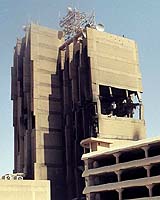
Buffalo, N.Y. (UPI) Dec 18, 2006 A U.S. theoretical physicist says he's created computer simulations to show how a shock-absorption system might make structures nearly blast-proof. The work by University at Buffalo physics Professor Surajit Sen is an extension of his published 2001 research that demonstrated it might someday be possible to build bridges, buildings and other such blast-proof projects. Sen said the findings could be applied to tanks, aircraft carriers and even bulletproof vests and other protective clothing. The simulations allow researchers and manufacturers to see how a system might work without having to painstakingly construct the systems and spend thousands of dollars to conduct a single blast in a test facility. In earlier University at Buffalo research, granular systems composed of individual spheres of gradually reduced size -- a "tapered" chain in a casing -- proved to be capable of efficiently absorbing much more than 80 percent of input energy. The main findings of the current research are that it's possible to retain the scalability of the system, reduce its size by a factor of five and make it far more capable of absorbing shock. The study is detailed in the October issue of Physical Review Letters. Community Email This Article Comment On This Article Related Links Space Technology News - Applications and Research
 Scientists study liquid crystal properties
 Kent, Ohio (UPI) Dec 18, 2006
 U.S. scientists say changing the size of colloids -- micro- or nanometer-sized particles -- makes a big difference in the properties of liquid crystals. |
|
|

| The content herein, unless otherwise known to be public domain, are Copyright 1995-2006 - SpaceDaily.AFP and UPI Wire Stories are copyright Agence France-Presse and United Press International. ESA PortalReports are copyright European Space Agency. All NASA sourced material is public domain. Additionalcopyrights may apply in whole or part to other bona fide parties. Advertising does not imply endorsement,agreement or approval of any opinions, statements or information provided by SpaceDaily on any Web page published or hosted by SpaceDaily. Privacy Statement |