
 |
 |
 |
 |
 |
 |
 |
 |
 |

 |
Reclaimed Wastewater Benefits Florida's Citrus Orchards
Immokalee FL (SPX) Jul 24, 2008 The Sunshine State has seen rapid growth in population during the last 50 years. The 1997 U.S. Census showed that the population of Florida increased more than five-and-a-half times from 1950 to 2000. Naturally, along with population increases, Florida is experiencing an increase in the amount of municipal waste. Studies confirm that the amount of wastewater generated by cities in Florida has increased more than fivefold since 1950. Environmental concerns about pollution of surface waters by treated wastewater have caused many communities to consider alternate ways to use secondary-treated, or reclaimed, wastewater. Before 1986, the city of Orlando and Orange County were discharging wastewater into a creek that flows into Lake Tohopekaliga in central Florida. To address concerns that the process would affect the quality water in the lake, city and county officials, along with the U.S. Environmental Protection Agency, devised a plan to use the wastewater for agricultural irrigation. According to a 2005 report by the Florida Department of Environmental Protection, there are currently 440 "reclaimed water reuse systems" in Florida, irrigating thousands of acres of golf courses, public land, and residential landscapes with 2,385 million liters of reclaimed water per day. Reclaimed wastewater is also being used to irrigate some of Florida's world-renowned citrus orchards. Because yearly rainfall in Florida is seasonal, with 75% of annual rainfall usually occurring between June and September, citrus growers rely on supplemental irrigation for healthy citrus crops. In a study supported by the City of Orlando and Orange County (FL), researchers set out to determine whether long-term irrigation with treated municipal wastewater reduced citrus tree health, (appearance and leaf nutrient content), decreased fruit loads, impacted fruit quality, or created increases in soil contaminants. Dr. Kelly T. Morgan, a scientist at the University of Florida's, Southwest Florida Research and Education Center, published the study report in the April, 2008 issue of HortScience. Dr. Morgan explained, "Increased water use by the growing population and localized water shortages during low rainfall years have resulted in the development of water use restrictions and decreases in permitted water use for agriculture. Increased use of reclaimed water for agricultural irrigation would not only reduce the wastewater disposal problem for urban areas, but could also reduce the amount of water withdrawn from Florida's aquifers used for irrigation." The yearly monitoring project, which began in the 1990s and ended in 2004, concluded that using reclaimed water for irrigation of citrus orchards showed few detrimental effects on the orchards. Morgan commented, "Appearance of trees irrigated with reclaimed water was usually better, with higher canopy, leaf color, and fruit crop ratings than orchards irrigated with groundwater. Although there was higher weed growth in reclaimed water-irrigated orchards due to higher soil water content, growers apparently have made adequate adjustments to their herbicide practices." Researchers concluded that long-term citrus irrigation with high-quality reclaimed water on well-drained sandy soils did not significantly reduce tree viability or yield and required relatively little adjustment in crop production practices: good news for the environment and citrus producers alike. Community Email This Article Comment On This Article Share This Article With Planet Earth
Related Links American Society for Horticultural Science Farming Today - Suppliers and Technology
 Pollination Habits Of Endangered Rice Revealed To Help Preservation
 Austin, TX (SPX) Jul 21, 2008
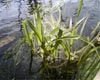
A type of wild rice that only grows in a small stretch of the San Marcos River is likely so rare because it plays the sexual reproduction game poorly, a study led by the Lady Bird Johnson Wildflower Center at The University of Texas at Austin has revealed. |
|
|

| The content herein, unless otherwise known to be public domain, are Copyright 1995-2007 - SpaceDaily.AFP and UPI Wire Stories are copyright Agence France-Presse and United Press International. ESA Portal Reports are copyright European Space Agency. All NASA sourced material is public domain. Additional copyrights may apply in whole or part to other bona fide parties. Advertising does not imply endorsement,agreement or approval of any opinions, statements or information provided by SpaceDaily on any Web page published or hosted by SpaceDaily. Privacy Statement |

 del.icio.us
 Digg
Digg Reddit
 YahooMyWeb
 Google
 Facebook