|
 |
 |
 |
 |
 |
 |
 |
 |

 |
Raytheon's Thermal-Eye 3500AS Improves Firefighters' Ability To See The Unseen
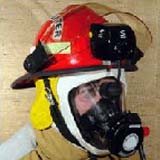
Dallas TX (SPX) Aug 13, 2004 Thermal imaging technology is about to undergo a revolution. Raytheon Infrared introduces the Thermal-Eye 3500AS thermal imaging core with Thermal-Eye Advanced Image Processing technology. This new product provides sophisticated images and color capabilities unsurpassed in its class. "With the introduction of the 3500AS, our Thermal-Eye products have become demonstrably better than they've ever been, and they're only going to continue to improve," said Raytheon Infrared President Chris Bade. "Our new Advanced Image Processing technology will end the debate over which type of platform is better, and it will revolutionize the way people see the unseen." The Advanced Image Processing technology used in the Thermal-Eye 3000AS series of camera cores improves the thermal sensitivity and dynamic range of the thermal imager and produces sharper images with more detail than those produced using even the best comparable technology. One of the unique features of the 3000AS series is its customizable "absolute" color capability. The feature enables an OEM (original equipment manufacturer) to set color points at discrete, definable temperatures. This allows the user to judge the temperature of objects in a scene more quickly and make rapid decisions. An OEM sets the color point of high-heat temperatures to appear in hues such as red, orange or yellow, and cooler temperatures remain in grey shades. When firefighters use the camera in a burning structure, they are able to identify the hottest areas easily while seeing scene detail, and they can know the approximate temperature of the walls, floors, ceilings and objects within the structure. The 3500AS features a new 30 micron detector, which supports a smaller, lighter design and high sensitivity (less than or equal to 50 mK) for increased scene detail. The advanced detector also includes a new ROIC, which offers an expanded dynamic range with greater than 1,100 degrees Fahrenheit saturation temperature that enables firefighters to see more detail in the hottest fires. The operating temperature range is expanded, and preliminary tests show that this core outperforms other technologies under high heat stress conditions. The 3000AS series cores will soon be offered in smaller form factor designs that can be built into hands-free systems or even smaller handheld enclosures that can aid firefighters without weighing them down with additional cumbersome equipment. In fire and rescue applications, thermal imaging is used to conduct scene sizeup, in-fire attack, search and rescue, HazMat assessments and post-fire overhaul. The advanced cores also are ideal for use in a host of law enforcement, security and industrial applications. "The Thermal-Eye 3500AS with Advanced Image Processing technology will provide fire and rescue workers with dramatically improved image quality, which will allow for better decisions and faster execution of tasks," said Raytheon Infrared Fire and Rescue Market Director Michael Studer. "In their line of work, that extra edge could very well make the difference between life and death for their victims, colleagues or themselves." Raytheon Infrared will demonstrate the new cores at booth No. 561 during the upcoming 2004 Fire-Rescue International conference on Aug. 13-14 at the New Orleans Morial Convention Center in New Orleans. Community Email This Article Comment On This Article Related Links Raytheon Infrared SpaceDaily Search SpaceDaily Subscribe To SpaceDaily Express Earth Observation News - Suppiliers, Technology and Application
 New Legislation Initiated To Support Commercial Remote Sensing Industry
 New York NY (SPX) Jan 11, 2006
The importance of remotely sensed data and technologies to support natural disasters has prompted attention and action in Washington. New initiatives and legislation authorizing appropriations to the remote sensing industry will be discussed at Strategic Research Institute's U.S. Commercial Remote Sensing Industry conference, scheduled for February 9-10, 2006 in Washington D.C. |
|
|

| The content herein, unless otherwise known to be public domain, are Copyright 1995-2006 - SpaceDaily.AFP and UPI Wire Stories are copyright Agence France-Presse and United Press International. ESA PortalReports are copyright European Space Agency. All NASA sourced material is public domain. Additionalcopyrights may apply in whole or part to other bona fide parties. Advertising does not imply endorsement,agreement or approval of any opinions, statements or information provided by SpaceDaily on any Web page published or hosted by SpaceDaily. Privacy Statement |