|
 |
 |
 |
 |
 |
 |
 |
 |

 |
Raytheon Illuminator Succeeds In Airborne Laser Flight Tests
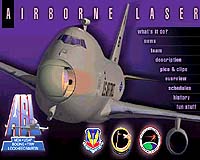
El Segundo CA (SPX) Oct 12, 2007 A solid-state illuminator laser developed by Raytheon for the Missile Defense Agency has been fired successfully more than 50 times for periods of up to 90 seconds since in-flight tests began in January. The kilowatt-class illuminator, built for the agency's Airborne Laser (ABL) program and fired from a heavily modified Boeing 747, is used to track a boosting ballistic missile. The projectile is then destroyed by the ABL's high-energy laser. Raytheon created the illuminator as a major supplier to Lockheed Martin, which provides the ABL Beam Control/Fire Control segment. Boeing is the prime contractor for the program and integrates the segment into the ABL system. "We're very pleased with the performance of our laser and proud of its role in the nation's missile defense," said Nick Uros, vice president for the Advanced Concepts and Technology group of Raytheon Space and Airborne Systems. "We'll be watching with keen interest as the test program continues." The illuminator has been fired more than 900 times since installation on the aircraft for ground tests that began in 2006. It has conducted more than 140 million pulsed laser shots, "a remarkable achievement for high-power solid-state lasers," according to Uros. Community Email This Article Comment On This Article Related Links Learn about laser weapon technology at SpaceWar.com
 Northrop Grumman Begins Integrating Megawatt-Class Laser Onto MDA's Airborne Laser Aircraft
 Redondo Beach CA (SPX) Oct 11, 2007
Northrop Grumman, along with industry teammates and the U.S. Missile Defense Agency (MDA), have begun re-assembly of the world's most powerful laser built for an airborne environment onto MDA's Airborne Laser (ABL) aircraft to prepare for high-power system testing. |
|
|

| The content herein, unless otherwise known to be public domain, are Copyright 1995-2007 - SpaceDaily.AFP and UPI Wire Stories are copyright Agence France-Presse and United Press International. ESA Portal Reports are copyright European Space Agency. All NASA sourced material is public domain. Additional copyrights may apply in whole or part to other bona fide parties. Advertising does not imply endorsement,agreement or approval of any opinions, statements or information provided by SpaceDaily on any Web page published or hosted by SpaceDaily. Privacy Statement |