
 |
 |
 |
 |
 |
 |
 |
 |
 |

 |
Raytheon Greatly Expands Available Bandwidth To The Military
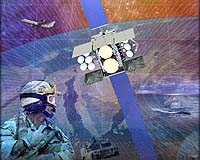
Reston VA (SPX) Jun 19, 2008 The Global Broadcast Service Satellite Broadcast Manager facility in Wahiawa, Hawaii, recently began operational broadcasts over the U.S. Air Force's new Wideband Global SATCOM (WGS) satellite. Developed and operated for the past 10 years by Raytheon, the Global Broadcast Service now provides users in the Pacific with increased capacity, thanks to the WGS. "The addition of WGS capacity dramatically increases situational awareness, provides faster sensor-to-shooter timelines, and enhances Global Broadcast Service to the warfighters in the Pacific," said Guy A. DuBois, vice president of Raytheon's Operational Technologies and Solutions. Raytheon has implemented three major upgrades to the GBS through its technology team with a demonstrated record of providing transition solutions with the lowest-risk and best-value system. The company's program intimacy provides the U.S. government the right technical skill to address the evolving nature of the next-generation transition contract that integrates GBS into future net-centric operations across the global information grid. The GBS is a worldwide mission support system providing wideband Internet protocol broadcasts of real-time video, imagery and large files with critical actionable intelligence and situational awareness data to military forces on post, in transit and in theater. Community Email This Article Comment On This Article Share This Article With Planet Earth
Related Links the missing link Read the latest in Military Space Communications Technology at SpaceWar.com
 Launch Of British Military Satellite Makes It A Skynet Hat-Trick
 London UK (SPX) Jun 18, 2008
The British Military's latest high-tech communications satellite was successfully launched from Kourou in French Guiana, South America. |
|
|

| The content herein, unless otherwise known to be public domain, are Copyright 1995-2007 - SpaceDaily.AFP and UPI Wire Stories are copyright Agence France-Presse and United Press International. ESA Portal Reports are copyright European Space Agency. All NASA sourced material is public domain. Additional copyrights may apply in whole or part to other bona fide parties. Advertising does not imply endorsement,agreement or approval of any opinions, statements or information provided by SpaceDaily on any Web page published or hosted by SpaceDaily. Privacy Statement |
 del.icio.us
 Digg
Digg Reddit
 YahooMyWeb
 Google
 Facebook