|
 |
 |
 |
 |
 |
 |
 |
 |

 |
Raytheon Completes Testing Of Navy Multiband Terminal Satellite Communications System
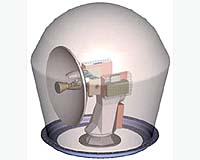
Marlborough MA (SPX) Mar 22, 2007 Raytheon and the U.S. Navy have successfully completed all formal testing of the Navy Multiband Terminal (NMT) satellite communication system--exceeding performance requirements and finishing nearly three weeks ahead of schedule. NMT is a system of submarine, shore-based and shipboard communications terminals for the transformational satellite communications (SATCOM) component of the U.S. Navy's FORCEnet concept. "These tests demonstrated that Raytheon's NMT will be ready to deliver on time to meet the Navy's critical schedule and will provide the reliability that warfighters can absolutely depend on," said William H. Swanson, Raytheon's Chairman and CEO. "Our NMT highlights Raytheon's unmatched experience and expertise in fielding innovative mission-critical solutions." Successful formal performance verification testing comes after Raytheon's earlier completion of rugged, critical environmental testing on the NMT two years ahead of schedule. Among the 350 critical requirements that Raytheon has met in developing the NMT, a few particularly important capabilities stand out: - The formal testing validated that Raytheon's new, advanced XDR (eXtended data rate) wave form performs both network and point-to-point anti-jam communications at data rates up to eight Mbps (megabits per second). This performance provides more than four times the current protected throughput to the warfighter. - The Navy and Raytheon validated that the NMT can operate on polar- inclined orbit satellites to provide full global connectivity for submarines even in the polar extremes. Raytheon further demonstrated nanosecond timing of antenna handovers under harsh at-sea conditions to ensure uninterrupted shipboard communications. - In addition, the testing verified that the NMT can automatically establish internet protocol connectivity using the Navy's Time Division Multiple Access Interface Processor or TIP, significantly enhancing bandwidth efficiency and greatly simplifying a sailor's duties when establishing communications. - Raytheon's NMT provides warfighters worldwide connectivity through existing Department of Defense satellites and delivers technically advanced software solutions for new satellites such as Wideband Global SATCOM, scheduled to be in service in 2007, and Advanced Extremely High Frequency due in 2010. The Space and Naval Warfare Systems Command, on behalf of its organizational partner, the Navy's Program Executive Office for C4I, expects to select a single performer for the NMT contract in the third quarter of fiscal 2007. Community Email This Article Comment On This Article Related Links Raytheon Company Read the latest in Military Space Communications Technology at SpaceWar.com Read the latest in Military Space Communications Technology at SpaceWar.com
 Boeing TSAT Laser Communications System Demonstrates Mission-Level Capabilities And Performance
 St. Louis MO (SPX) Mar 21, 2007
Boeing and its partners became the first team to successfully demonstrate the ability of its Transformational Satellite (TSAT) laser communications system to deliver high-power operations at three data rates during recent U.S. Air Force tests. |
|
|

| The content herein, unless otherwise known to be public domain, are Copyright 1995-2006 - SpaceDaily.AFP and UPI Wire Stories are copyright Agence France-Presse and United Press International. ESA PortalReports are copyright European Space Agency. All NASA sourced material is public domain. Additionalcopyrights may apply in whole or part to other bona fide parties. Advertising does not imply endorsement,agreement or approval of any opinions, statements or information provided by SpaceDaily on any Web page published or hosted by SpaceDaily. Privacy Statement |