|
 |
 |
 |
 |
 |
 |
 |
 |

 |
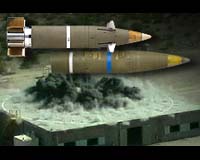
Raytheon Completes Extended-Range Test For Excalibur Block Ia-2
Tucson AZ (SPX) Nov 30, 2006 Raytheon's Missile Systems business and BAE Systems-Bofors successfully fired the first extended-range GPS-guided Excalibur projectiles at Yuma Proving Ground, Ariz., last month. Excalibur is the next-generation family of projectiles for U.S. Army and Marine Corps artillery. The so-called Guided Series-6 test of the Excalibur Block Ia-2 consisted of two inert rounds configured with tactical base and live base bleed. Base bleed is a solid fuel that burns in the base of the projectile, expelling gas that reduces drag with the result of extending range. The primary test objectives were to demonstrate the navigational functionality throughout the flight with live base bleed and to verify base-bleed performance. "Continued test successes demonstrate Excalibur's ability to meet the full Block Ia requirements," said Lt. Col. Joe Minus, U.S. Army product manager for the Excalibur program. "The base bleed with charge five will propel Excalibur beyond the 40-kilometer (24.8 miles) objective range from the current U.S. howitzers." The Archer, the Swedish 52-caliber howitzer, will achieve an Excalibur range of approximately 33 miles (50 kilometers). The Block Ia-2 tests will include full system performance testing, to include maximum range shots from the Archer, and will be conducted in parallel with Block Ia-1 urgent fielding. The Excalibur program is responding to an urgent request from the warfighter to accelerate fielding because of the projectile's better than 10- meter (33 feet) accuracy that is not available from any other artillery projectile. With its accuracy and increased effectiveness, Excalibur provides operational flexibility and reduces the logistical burden for deployed ground forces. It also reduces collateral damage through increased precision, near- vertical descent and optimized fragmentation pattern. Excalibur Ia-1 is to be fielded to deployed forces in early 2007. The extended range of the Ia-2 Excalibur, with a planned initial operational capability in fiscal year 2008, will enable optimal positioning of forces and further extend a maneuver unit's tactical reach. Community Email This Article Comment On This Article Related Links Raytheon The latest in Military Technology for the 21st century at SpaceWar.com The latest in Military Technology for the 21st century at SpaceWar.com
 US Army To Deploy Lockheed Martin Persistent Threat Detection Systems
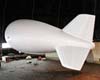 Akron OH (SPX) Nov 30, 2006
The U.S. Army has awarded Lockheed Martin a $77.5 million contract to provide additional tethered aerostat surveillance systems for deployment in support of Operation Iraqi Freedom and Operation Enduring Freedom. The Persistent Threat Detection Systems (PTDS) are equipped with multi-mission sensors to provide continuous surveillance, detection and communications in support of coalition forces. |
|
|

| The content herein, unless otherwise known to be public domain, are Copyright 1995-2006 - SpaceDaily.AFP and UPI Wire Stories are copyright Agence France-Presse and United Press International. ESA PortalReports are copyright European Space Agency. All NASA sourced material is public domain. Additionalcopyrights may apply in whole or part to other bona fide parties. Advertising does not imply endorsement,agreement or approval of any opinions, statements or information provided by SpaceDaily on any Web page published or hosted by SpaceDaily. Privacy Statement |