|
 |
 |
 |
 |
 |
 |
 |
 |

 |
Raytheon Awarded Contract To Provide Marines With Persistent Surveillance
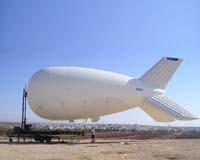
Tewksbury MA (SPX) Apr 11, 2008 U. S. Marines in Iraq will have enhanced ability to detect hostile troop movements thanks to Raytheon's Ground Based Operational Surveillance System (GBOSS). Raytheon has been awarded a $60 million contract option to provide the U.S. Marine Corps with GBOSS elevated sensor systems with networked remote operational capability. "These systems save lives," said Pete Franklin, vice president, National and Theater Security Programs for Raytheon Integrated Defense Systems (IDS). "GBOSS provides the warfighter with the capability to detect the enemy's movements at great distances, allowing for rapid response to threats." GBOSS is an enhancement of the popular Rapid Aerostat Initial Deployment (RAID) system currently in wide use in Operations Enduring Freedom and Iraqi Freedom. GBOSS provides persistent surveillance using infrared sensors elevated on a stationary platform. Earlier versions of the RAID system employed an aerostat to elevate the sensors. The current tower-based systems provide an enhanced capability with fewer logistics concerns. Enhancements unique to GBOSS include the addition of a second electro-optical infrared sensor and ground-based radar networked into a single remote ground control station. The enhanced system provides the warfighter increased situational awareness. RAID was developed to respond to the U.S. military's critical need for persistent surveillance in Operations Enduring Freedom and Iraqi Freedom. Work will be performed at Raytheon IDS' Integrated Air Defense Center, Andover, Mass., and Warfighter Protection Center, Huntsville, Ala. Community Email This Article Comment On This Article Related Links The latest in Military Technology for the 21st century at SpaceWar.com
 US accused of pressing nations over cluster bomb treaty
 Brussels (AFP) April 9, 2008
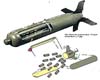
A leading group working on behalf of disabled people accused the United States Wednesday of pressuring European and African countries not to join a new treaty next month banning cluster bombs. |
|
|

| The content herein, unless otherwise known to be public domain, are Copyright 1995-2007 - SpaceDaily.AFP and UPI Wire Stories are copyright Agence France-Presse and United Press International. ESA Portal Reports are copyright European Space Agency. All NASA sourced material is public domain. Additional copyrights may apply in whole or part to other bona fide parties. Advertising does not imply endorsement,agreement or approval of any opinions, statements or information provided by SpaceDaily on any Web page published or hosted by SpaceDaily. Privacy Statement |