|
 |
 |
 |
 |
 |
 |
 |
 |

 |
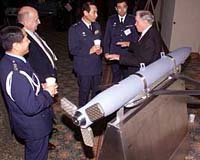
Raytheon Awarded 144M Small Diameter Bomb II Risk Reduction Contract
Tucson AZ (SPX) Apr 24, 2006 Raytheon has been awarded a $144 million contract from the U.S. Air Force Air Armament Center, Eglin Air Force Base, Fla., to conduct risk reduction work for Small Diameter Bomb (SDB) II. Raytheon will be competing for selection in 42 months as the prime contractor for the SDB II program, which has a potential value of more than $1.3 billion. As a netted weapon with an all-weather tri-mode seeker, SDB II provides warfighters with advanced capability to attack moving targets. This results in a very robust weapon system compatible with a wide variety of GPS-based targeting systems that can acquire and recognize moving targets. "SDB II is one of the first members of the next generation of network-capable weapons," said Louise Francesconi, president of Raytheon's Missile Systems business in Tucson where the contract will be executed. "Raytheon is committed to bring this capability to the warfighter as quickly as possible." "SDB II represents a total system solution enabling airborne and ground-based warfighters to communicate with and control a sophisticated small guided bomb to engage moving targets," said Ken Pedersen, vice president of Advanced Programs. "With the rapid advances in computer and electronics capability and affordability, it is exciting how much sophistication and capability we can put in this next generation of low-cost weapons." Community Email This Article Comment On This Article Related Links - The latest in Military Technology for the 21st century at SpaceWar.com
 Russian Bombers Flew Undetected Across Arctic
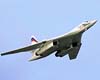 Moscow, Russia (RIA) Apr 24, 2006
Russian military planes flew undetected through the U.S. zone of the Arctic Ocean to Canada during recent military exercises, a senior Air Force commander said Saturday. The commander of the country's long-range strategic bombers, Lieutenant General Igor Khvorov, said the U.S. Air Force is now investigating why its military was unable to detect the Russian bombers. |
|
|

| The content herein, unless otherwise known to be public domain, are Copyright 1995-2006 - SpaceDaily.AFP and UPI Wire Stories are copyright Agence France-Presse and United Press International. ESA PortalReports are copyright European Space Agency. All NASA sourced material is public domain. Additionalcopyrights may apply in whole or part to other bona fide parties. Advertising does not imply endorsement,agreement or approval of any opinions, statements or information provided by SpaceDaily on any Web page published or hosted by SpaceDaily. Privacy Statement |