
 |
 |
 |
 |
 |
 |
 |
 |
 |

 |
Rare Herbal Plants Aboard Shenzhou-7 Spacecraft Studied
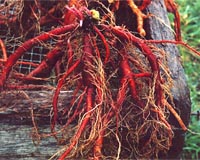
Beijing (XNA) Oct 06, 2008 Several rare herbal plants aboard the recent Shenzhou-7 space mission have now been transferred to a Chinese nanobiotechnology lab for study. The plants, including rauwolfia and salvia miltiorrhiza (also known as red sage), were used to produce nanomedicines to treat cancerous tumors, Professor Zhang Yangde with China's Laboratory of Nanobiotechnology at the Central South University told the Changsha Daily newspaper in Hunnan Province on Thursday. Anti-tumor nanomaterials can be obtained from extracts of the herbal plants, Zhang said, adding researchers hoped the microgravity environment in outer space could have spurred gene mutation of the plants and enabled them to grow and reproduce faster. Rauwolfia is a genus of evergreen trees and shrubs of the Apocynaceae family. Rich in alkaloid, the plant is widely used to produce anti-hypertensive drugs. The natural reserves of this plant are declining as a result of over-harvesting. The international Union for Conservation of Nature and Natural Resources has listed the plant as endangered. Salvia miltiorrhiza is a shade-providing perennial flowering plant,highly valued for its roots in traditional Chinese medicine. Other samples aboard the spacecraft included the seeds of 25 endangered plants and live samples of aquatic animals and plants. The Shenzhou-7 space module carrying three taikonauts landed safely by parachute on Sept. 28 in China's northern grasslands after a 68-hour flight. The mission included the first ever spacewalk by a Chinese astronaut.
Source: Xinhua News Agency Community Email This Article Comment On This Article Share This Article With Planet Earth
Related Links Space Tourism, Space Transport and Space Exploration News
 Magnetic Hunger Could Drive Space Travelers Insane
 Moscow (RIA Novosti) Oct 02, 2008
The absence of Earth's magnetic field could lead to astronauts developing mental disorders during interplanetary flights, particularly expeditions to Mars, Russian scientists said. |
|
|

| The content herein, unless otherwise known to be public domain, are Copyright 1995-2007 - SpaceDaily.AFP and UPI Wire Stories are copyright Agence France-Presse and United Press International. ESA Portal Reports are copyright European Space Agency. All NASA sourced material is public domain. Additional copyrights may apply in whole or part to other bona fide parties. Advertising does not imply endorsement,agreement or approval of any opinions, statements or information provided by SpaceDaily on any Web page published or hosted by SpaceDaily. Privacy Statement |
 del.icio.us
 Digg
Digg Reddit
 YahooMyWeb
 Google
 Facebook