|
 |
 |
 |
 |
 |
 |
 |
 |

 |
Radiocarbon Testing Challenges Understanding Of Ancient Hawaiian Society
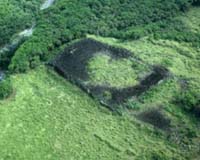
Maui HI (SPX) Aug 02, 2006 The development of monumental architecture and social complexity on the Hawaiian island of Maui occurred over a span of at least 500 years, according to the most detailed study to date on the antiquity of the island's extensive temple system. The findings, in the August issue of Current Anthropology, challenge previous conceptions of ancient Hawaiian civilization by identifying cycles of temple construction that coincide with politically charged periods of warfare and island consolidation. "Because the islands are relatively isolated from the rest of the world, the development of monumental architecture and complex society in Hawaii is of keen interest to archaeologists," writes Michael Kolb (Northern Illinois University), who spent more than a decade locating and excavating temple sites. "In many ways, Maui represents an excellent test case for state development. Its monumental architecture is directly linked to economic, political, and ritual development, not unlike the most famous early civilizations, such as the Maya or ancient Eqyptians." Kolb conducted radiocarbon-dating analyses on samples from forty ruins on the island of Maui, including several newly discovered temples. The radiocarbon dates indicate the earliest temples were built in the 13th century, with construction continuing into the early 19th century. Prior research had indicated that Maui's temples, known as heiau, were built within a span of decades near the turn of the 17th century. Kolb's study also identifies an important shift in temple construction from open-air temples used for ancestral worship to enclosed, more elaborate temples used for sacrificial offerings to war gods. Large temples often covered more area than a football field and stood 40 feet in height. "The Hawaiian civilization lacked ceramics, which is typically why radiocarbon dating is relied upon by scientists," says Kolb. "Before a temple was built, the land would be set ablaze to clear it from vegetation, leaving behind charcoal remains. We also were able to gather samples for dating from the sites of ancient ovens and bonfires." The ancient people of Maui stacked lava rocks to form the foundation of the platform temples, often built on the faces of cliffs or other high points on the island. The more elaborate, terraced temples were adorned with altars, oracle towers, offering pits, and god or ancestral images carved from wood or stone. "Oftentimes, in a show of economic might, a conquering chief would remodel, build additions to, and rededicate a rival's temples," explains Kolb. "Many of the early structures were modified or new ones were built with enclosures on top. Access was limited to reward loyal constituents, and sacrificial worship became more of a focus." Community Email This Article Comment On This Article Related Links Northern Illinois University All About Human Beings and How We Got To Be Here
 Tiny Inhaled Particles Take Easy Route From Nose To Brain
 Rochester NY (SPX) Aug 08, 2006
In a continuing effort to find out if the tiniest airborne particles pose a health risk, University of Rochester Medical Center scientists showed that when rats breathe in nano-sized materials they follow a rapid and efficient pathway from the nasal cavity to several regions of the brain, according to a study in the August issue of Environmental Health Perspectives. |
|
|

| The content herein, unless otherwise known to be public domain, are Copyright 1995-2006 - SpaceDaily.AFP and UPI Wire Stories are copyright Agence France-Presse and United Press International. ESA PortalReports are copyright European Space Agency. All NASA sourced material is public domain. Additionalcopyrights may apply in whole or part to other bona fide parties. Advertising does not imply endorsement,agreement or approval of any opinions, statements or information provided by SpaceDaily on any Web page published or hosted by SpaceDaily. Privacy Statement |